
How Sungboon Editor Reached 11.4% Upsell Conversion Rate Using Zotasell on Shopline
Table of content
Sungboon Editor had a problem that doesn’t often happen on a standard Shopify or Shopline dashboard: their traffic was converting, but their customers were under-buying.
While shoppers were successfully completing purchases, they were missing out on the complementary products. Because the store lacked an automated cross-selling mechanism, these missed conversations were happening at the exact moments of highest buying intent.
Sungboon Editor resolved the issue with Zotasell’s “Frequently Bought Together” (PDP) and “You May Also Like” (Cart), turning into the store’s smart recommendation engine.
The results transformed their bottom line. Within just three months, this strategy generated:
- An 11.4% upsell conversion rate
- A 615 TWD average revenue uplift on every upsell transaction
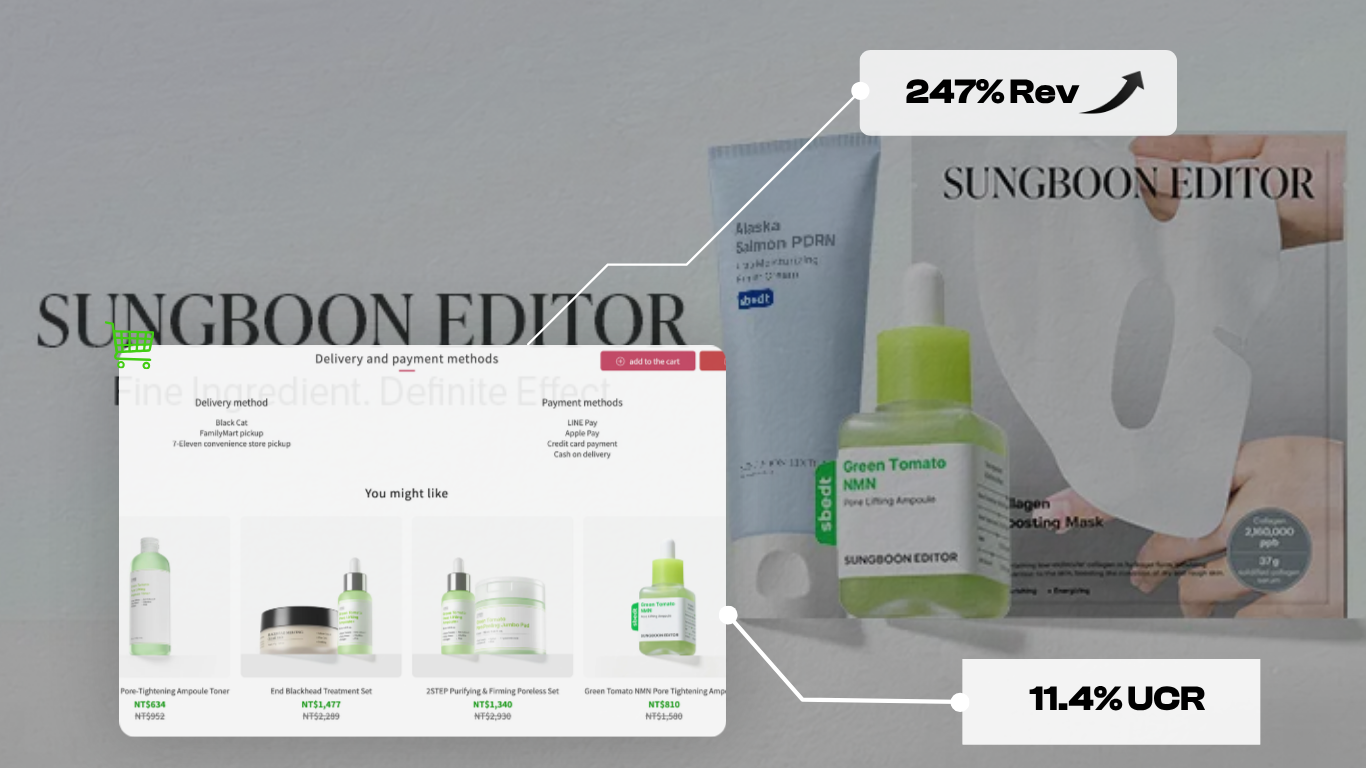
- Compounding monthly revenue growth that peaked at +247% in a single period
In this case study, you’ll see the exact playbook Sungboon Editor used on Shopline. We’ll explore how they configured Zotasell, the placements that drove the highest ROI, and the hidden metrics that reveal where the real e-commerce leverage sits.
The Zotasell Impact on Sungboon Editor in 3 Months
Before diving in, here’s the performance summary for readers who want the ROI picture upfront:
| KPI | Result |
| CTR | 10.8% |
| Upsell Conversion Rate | 11.4% (1 in 9 clicks became an upsell order) |
| Upsell Revenue Growth, Month 1 → Month 2 | +247% |
| PDP Placement CTR | 1.6% across 83,291 PDP impressions |
| Cart Placement CTR | 5.70% |
| Items per Upsell Order | 1.42 average |
Who Is Sungboon Editor?
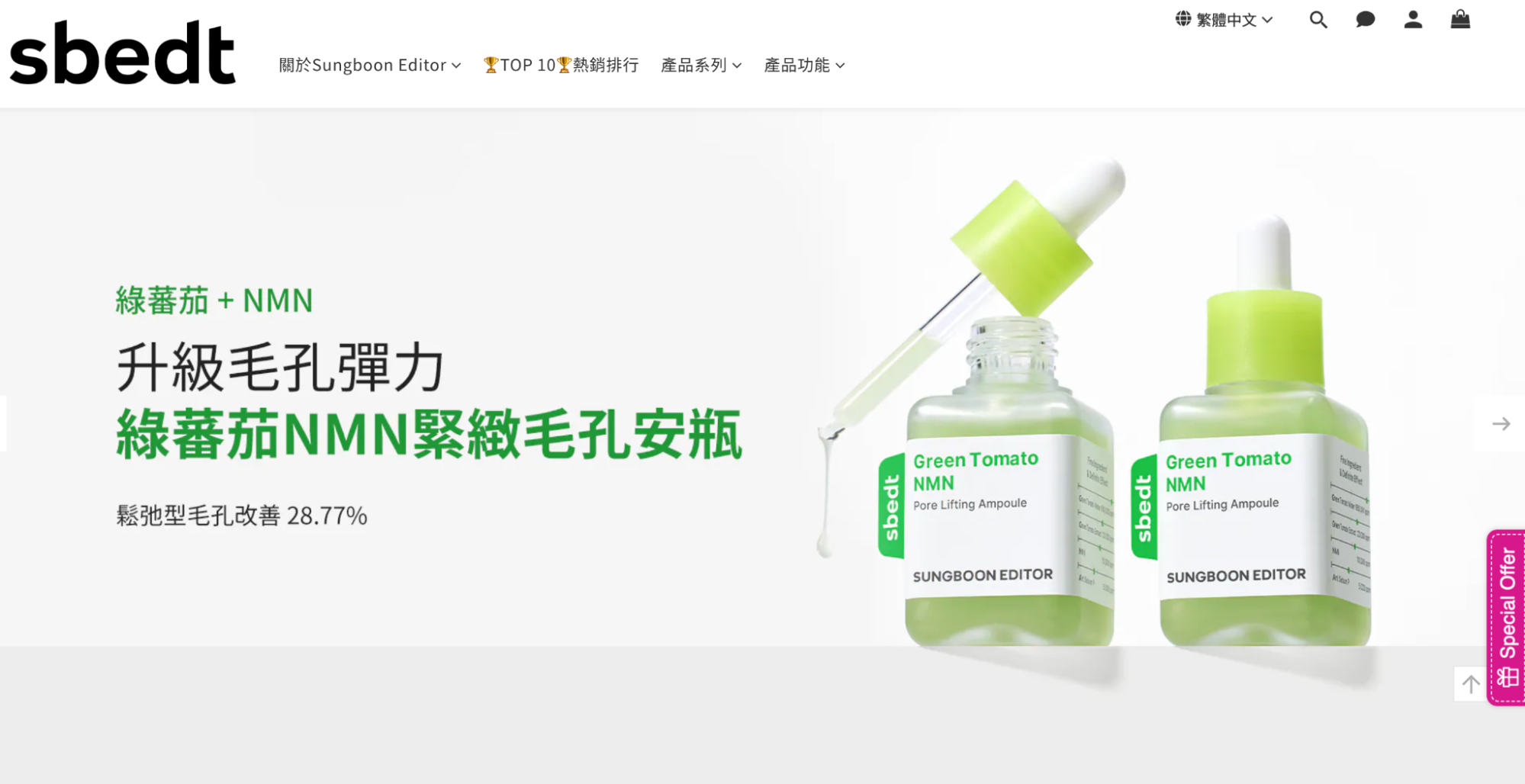
Sungboon Editor is a premium Korean skincare brand rapidly expanding across Asia, with a primary e-commerce footprint on Shopline Taiwan. They operate in a market known for having some of the most research-driven beauty consumers in the world.
Their entire product line is built around the concept of a complete skincare routine, meaning almost every item naturally pairs with one or two others.
Because this logical connection between products already existed, their catalog was the perfect environment for an AI-driven cross-selling strategy. What they were missing was a system smart enough to surface those pairings at the exact right moment.
Their customer acquisition strategy relies heavily on Instagram campaigns and Key Opinion Leader (KOL) collaborations. This meant the traffic landing on their product pages were mainly warm, high-intent buyers who arrived with a specific product in mind.
Crucially, these buyers are highly open to adding more to their baskets, but only if the product suggestion makes perfect sense for their routine. That personalized recommendation is exactly what Zotasell was built to deliver.
3 Problems That Were Holding Back Sungboon Editor’s Revenue
Despite having healthy traffic and strong brand recognition across Asia, Sungboon Editor realized they were leaving money on the table. They were facing three specific e-commerce hurdles that no amount of additional ad spend could solve.
Customers buy single items instead of full routine
The most obvious symptom was low basket depth. Sungboon Editor’s customers were arriving with intent to buy a specific product, but they were leaving with only that product.
The baseline data from January 2026 told the story. Across over 20,000 product page impressions, they generated 2,671 clicks on recommended items, but only 10% resulting in upsell orders.
The issue wasn’t product quality or a lack of trust. The core problem was that there was no intelligent system guiding shoppers toward the complementary items that actually completed their routine.
A skincare customer buying a serum often needs the matching essence, but without that specific, timely nudge, they simply won’t add it to their cart.
The bottleneck of manual product curation
Skincare is naturally relational (e.g., a specific cleanser pairs with a specific toner). However, trying to maintain those product pairings manually as inventory shifted and new seasonal lines launched was an operational nightmare.
For a growing Shopline merchant, manual curation simply cannot scale. More importantly, static or outdated recommendations actively erode consumer trust.
If a shopper is shown an irrelevant product pairing, they learn to ignore those suggestions in the future. Sungboon Editor needed an automated engine that could adapt as the catalog evolved, keeping recommendations fresh without requiring constant manual intervention from their team.
The risk of UX friction
Sungboon Editor’s traffic is heavily driven by KOLs and Instagram, so the vast majority of their buyers are browsing on mobile devices. For these shoppers, the window between impulse and action is incredibly narrow.
They couldn’t afford to introduce friction. Any recommendation widget that slowed down page load speeds, blocked the main “Add to Cart” button, or felt like a spammy pop-up could risk the whole purchase.
Sungboon Editor needed a solution that was lightweight to the Shopline mobile experience, and could scale up to 108,000 monthly impressions.
How Sungboon Editor Used Zotasell to Drive Growth
Zotasell smart AI upsell tools not only help drive more revenue but also keep the buying process smoothly. Sungboon Editor implemented two specific Zotasell features on their Shopline store.
Frequently Bought Together on the Product Page
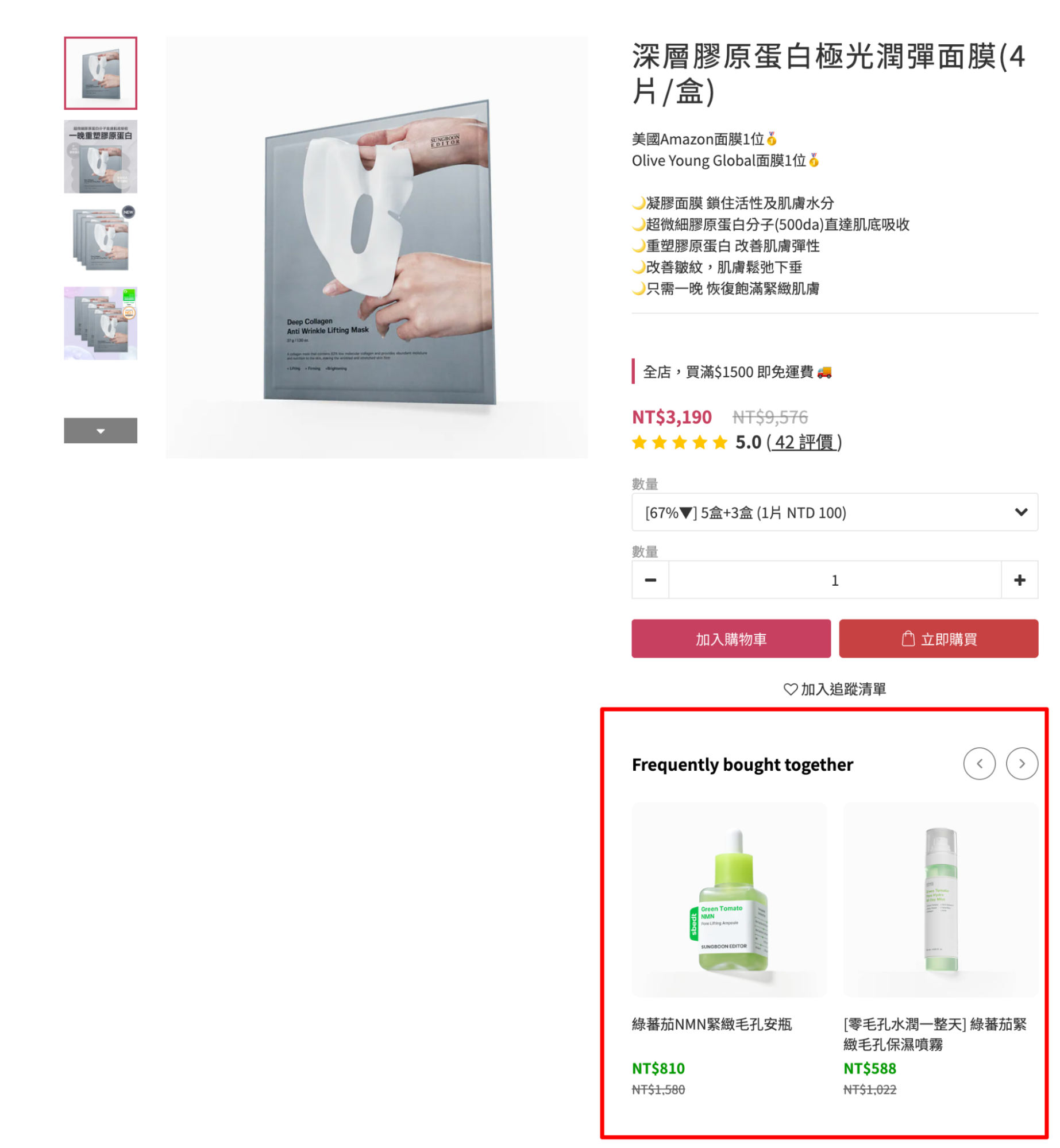
Zotasell’s Frequently Bought Together appears clearly on Sungboon Editor’s product page. The widget stays on the Shopline product detail pages, curating pairings aligned with their skincare routine logic.
Their product page has the highest and purchase intent. A customer reading a product description has already cleared every awareness and is willing to order.
A contextually accurate “frequently bought with this” recommendation at that moment doesn’t interrupt the journey; it extends it naturally.
The interesting part of Zotasell’s FBT is that the product recommendations change every time the customers reload the page.
This way, customers can have more options, leading to more chances of purchasing upsell products.
The numbers reflect how well this fit Sungboon Editor’s store: PDP impressions scaled from 15,253 in Month 1 to 52,129 in Month 3 (a 241% increase).
You May Also Like on the Cart: Monetizing Committed Buyers
Picture a typical Sungboon Editor customer. She found the exact serum she wanted, read the reviews, and added it to her cart. She is done browsing and is just one tap away from checking out. Before Zotasell, that moment marked the end of the conversation.
Instead of staring at a blank cart, the customer now receives perfect-timing recommendations on what they should buy right away.
For the Sungboon Editor team, the operational benefits were just as significant as the revenue growth. As the store launches new products or rotates seasonal collections, the AI recommendation logic adapts automatically.
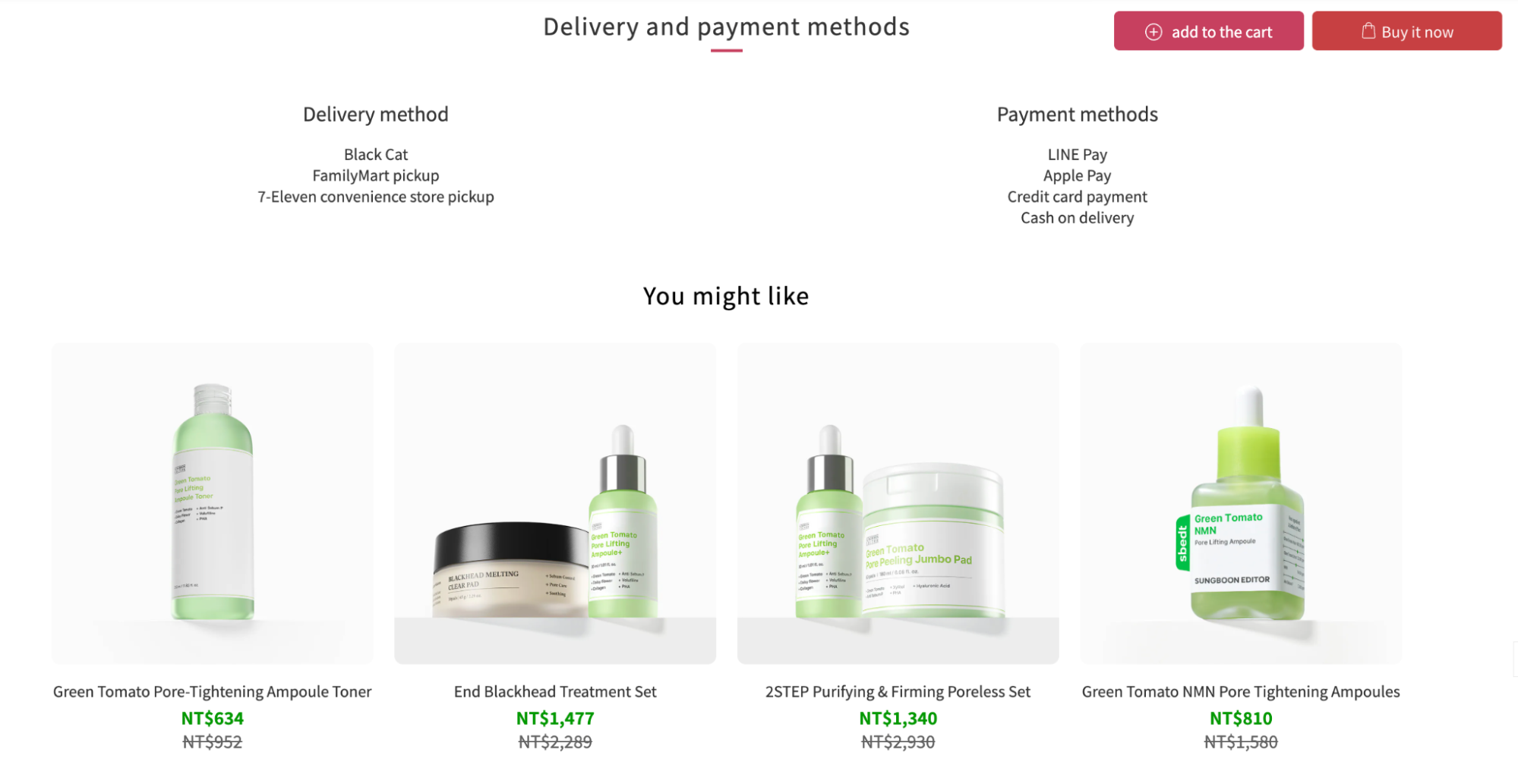
The data proves how effective this placement is for monetizing committed buyers. Across the first two months, the cart placement delivered a strong 5.7% click-through rate, peaking at 7.41% in February.
The Results: What the Rates Actually Tell You
The data from the first 3 months of 2026 showed exactly what happens when an automated recommendation engine perfectly matches a brand’s products.
+247% Upsell Revenue Growth in 3 months
During the first month, Zotasell’s AI began its learning phase, analyzing customer behavior to optimize pairings. The widgets were live, and the system was figuring out which product pairings Sungboon Editor’s customers actually wanted to buy.
The second month of using Zotasell, Sungboon Editor saw an upsell revenue jump by 247%.
This was the moment Zotasell’s logic fully understood the brand’s catalog. Shoppers who usually bought just one item were suddenly seeing the perfect matching product, exactly when they were ready to buy.
Because the pairings were so accurate, the number of clicks nearly tripled, and the conversion rate climbed to 12.8%. When more people click and a higher percentage of them buy, it proves the recommendations are highly relevant.
By March, growth leveled out to +15.1%. However, this growth was built on a revenue base that was already 3.5 times larger than January. The store also handled a massive 5x increase in views (over 108,000 impressions).
An 11.4% Upsell Conversion Rate
In e-commerce, showing recommendations is easy. Getting people to actually buy them is hard. Over the full three months, Zotasell delivered an 11.4% click-to-order conversion rate.
That means for every nine shoppers who clicked a Zotasell recommendation, one of them bought it. Sungboon Editor didn’t have to use discounts or pushy pop-ups. They just showed the right product at the right time.
This conversion rate was incredibly consistent. It started at 8.8% while the system was learning and peaked at 12.8% in February. This proves customers weren’t just clicking around out of curiosity. They clicked because Zotasell’s suggestions felt like helpful advice, not ads.
For Shopline merchants looking to set realistic goals, this data proves that a well-setup Zotasell store can reliably convert 9% to 13% of recommendation clicks into real orders.
1.42 Extra Items Per Order
Over the entire three-month period, every upsell order included an average of 1.42 extra items. More importantly, that number barely changed, staying steady between 1.39 and 1.43.
That rock-solid consistency is actually more impressive than a single big month of sales.
It proves that Sungboon Editor’s customers weren’t just clicking a recommendation once and forgetting about it. Their actual shopping habits changed. Instead of buying single items, they started building full skincare routines.
Zotasell simply gave the store the ability to match how its customers already think. By acting like a helpful digital beauty advisor, it made adding a second or third item feel like the obvious next step.
FAQs: Zotasell for Shopline Merchants
How does Zotasell AI upsell increase AOV without increasing ad spend?
It sells more to buyers already in your store. Every upsell order Sungboon Editor generated came from existing traffic, adding an average of 615 TWD per upsell transaction simply by showing the right product at the right moment.
Will Zotasell upsell recommendations hurt my store’s base conversion rate?
No, if placements are relevant and non-intrusive. Sungboon Editor’s upsell conversion rate held between 8.8% and 12.8% even as monthly impressions scaled 5x. Widgets placed below the primary CTA extend the journey; they don’t block it.
What is the difference between Frequently Bought Together and You May Also Like?
Frequently Bought Together uses social proof to expand the basket while a customer is still deciding. You May Also Like targets committed buyers before checkout. Both serve AOV growth at different intent stages.
How long does it take to see the results?
Sungboon Editor saw a +247% jump in Month 2 as product pairings matured. Plan for a 30-day ramp before drawing final conclusions, the system gets more accurate, and more profitable, as it learns your catalog.
Ready to Grow Your Shopline Store with Zotasell?
Sungboon Editor made smart use of the customers already in their store, converting at an 11.4% upsell rate with AI Upsell. Their Shopline Taiwan store adapted perfectly with the AI recommendation feature, seeing no conflict in UX while keeping the high AOV.
But Sungboon Editor isn’t the only brand achieving these numbers. You can see how Crocs adapt Zotasell Infinite Scroll in their store to scale revenue effectively in 30 days.
If your Shopline store is driving traffic without a recommendation layer capturing that intent, the playbook is proven and the setup takes minutes.
Join 500+ Shopline merchants using Zotasell to scale AOV installing Zotasell on your store and activate your first recommendation widget today!

Join in our newsletter
Need more detail?
Access our Help Center & Resources to learn how Zotasell works, explore use cases, and share with your team.