


Higher traffic does not always lead to higher profit. During Christmas, rising ad costs and intense competition leave little time to optimize. Relying on discounts or isolated upsells is no longer enough. Leading brands build a connected growth system that combines upsells with fast sites, strong design, trust signals, smooth checkout, and post-purchase engagement. This turns seasonal demand into long-term growth.
Holiday & Special Events
December 17, 2025
How Upsells Can Boost Xmas Sales Without Discounts
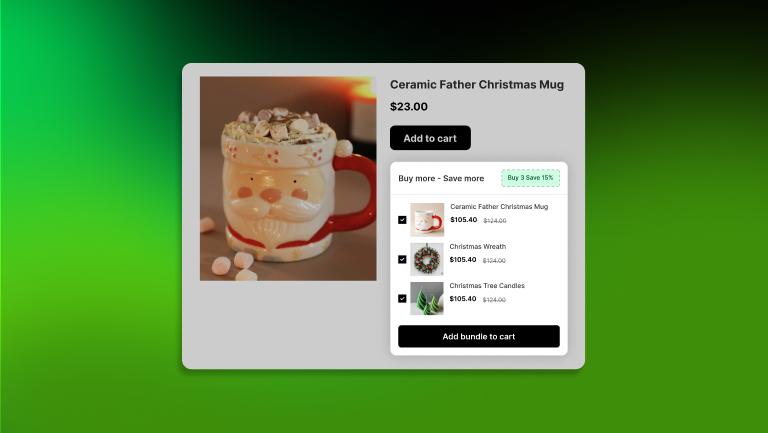
Table of content
The Christmas season consistently represents the most profitable period for e-commerce businesses worldwide. According to the 2024 Holiday Retail Sales Report published by the National Retail Federation, total US retail sales during November and December reached nearly 994.1 billion dollars, reflecting year-over-year growth of about 4%. This momentum is reinforced by Adobe Analytics, which reported that Black Friday online sales surpassed 11.8 billion dollars, while Cyber Monday reached 14.25 billion dollars, making it the largest online shopping day in history. With more than 200 million shoppers purchasing across channels during the Thanksgiving to Cyber Monday period, the holiday season creates an unprecedented concentration of traffic and buying intent.
Why Upsell Alone Is Not Enough During Christmas

Upselling has long been a proven method to boost average order value, but during Christmas, it requires a more strategic and thoughtful approach. This season brings urgency, high expectations, and fierce competition. In this environment, upsell tactics alone are no longer enough to drive lasting growth.
Holiday shoppers behave differently. They shop fast, compare more, and feel pressured to make confident decisions quickly. Instead of browsing slowly, they want to complete their gifting tasks with speed and clarity. Even a well-designed upsell can backfire if it’s poorly timed or disrupts their flow.
Many stores see big traffic but fail to raise order value. Single-product purchases dominate, and cart abandonment increases due to weak messaging, slow sites, or low urgency. Christmas buyers won’t spend time reading complex details. Every second matters.
To succeed, upselling must become a seamless part of the customer journey. It should be timely, relevant, and integrated across every step, from product discovery to checkout and post-purchase. When aligned with shopper intent, upsells create value, not friction.
Strategy 1: Upsell + Product Page Optimization Tools

Pain Point
In our work with Shopify merchants during Q4 campaigns, we’ve consistently seen that Christmas brings massive traffic surges, but that traffic often fails to convert when product pages are under-optimized. However, despite the influx of visitors and strong buyer intent, many merchants struggle to convert that traffic into meaningful sales. A large portion of shoppers land on a product page, glance briefly, and then leave without taking any action. The root cause frequently lies in poor page structure, lack of clarity, and upsell placements that feel disconnected from the shopping experience.
When product pages are cluttered, slow to load, or lacking visual cohesion, customers are unable to quickly grasp the value of what they’re seeing. In these moments, they fail to notice high-margin add-ons, skim past curated bundles, and often abandon the site entirely. Instead of acting as a gateway to conversion, the product page becomes a point of friction. This is particularly costly during the holiday season, when shoppers are driven by urgency and expect clarity, speed, and trust at every click.
Solution
To fully unlock upselling potential, merchants should treat product page design and upsell placement as one seamless experience. These two elements should work together rather than function separately. It is not enough to simply add a product suggestion widget. Every part of the page should guide the shopper toward relevant add-ons with clarity and ease.
When Zotasell’s AI-driven upsell logic is embedded into a clean, conversion-focused holiday layout, it allows merchants to show gift bundles, seasonal upgrades, and commonly purchased combinations at the right moment. These offers can appear next to product images, pricing details, or call-to-action buttons so they feel like a natural part of the shopping experience.
In this setup, the product page becomes more than just a place to view items. It turns into a smart sales engine that captures attention, boosts average order value, and improves the overall sense of relevance and satisfaction.
Tools That Pair Well with Zotasell
- GemPages: A robust drag-and-drop builder offering Christmas-themed sections, optimized for mobile and desktop. Its flexibility makes it ideal for placing Zotasell’s upsell elements at key visual touchpoints.
- EComposer: A conversion-optimized page builder that helps merchants highlight upsell placements without disrupting content flow. Especially useful for visual storytelling and gift set presentation.
Why This Works for Christmas
Christmas shoppers tend to move quickly, often browsing on mobile devices while managing multiple tasks, lists, and tight delivery windows. They are not looking for complexity-they are seeking clarity. In this context, a well-designed product page that delivers fast performance, intuitive structure, and contextually relevant upsell suggestions becomes a high-performing conversion asset.
Instead of overwhelming visitors with an excess of choices or interrupting their flow with irrelevant pop-ups, this approach provides logical, well-timed pathways. These might include completing a gift with a matching item, upgrading to a holiday-exclusive bundle, or adding thoughtful, seasonally appropriate extras. Each recommendation aligns naturally with the shopper’s current intent, helping them reach their goal faster and with more confidence.
What emerges is a seamless, guided experience that encourages higher-value purchases, improves bundle engagement, and builds brand trust. All of this is achieved without relying on aggressive discounting, proving that strategic upsell implementation can enhance both profitability and customer satisfaction.
Strategy 2: Upsell + Add‑to‑Cart Trigger Tools
Pain Point
Within the e-commerce funnel, few actions carry as much strategic weight as the Add to Cart event. Conversion rate optimization studies and Shopify merchant benchmarks consistently identify this moment as one of the strongest indicators of purchase intent. It signifies a decisive moment when the shopper transitions from casual browsing to genuine buying intent. Despite its importance, many merchants fail to capitalize on this opportunity. Some ignore it entirely, while others interrupt the flow with generic pop-ups or irrelevant suggestions that feel disconnected from the customer’s journey.
This issue becomes even more pronounced during the holiday season. Shoppers are navigating dozens of options, switching between devices, and managing tight timelines. In this context, any hesitation or disruption can lead to abandoned carts, missed upsell opportunities, and a noticeable drop in conversion rates. When brands fail to engage meaningfully at this stage, the cost is not just a lower average order value; it is the potential loss of the entire sale.
Solution
Leading Shopify brands view the Add to Cart moment as a precisely timed opportunity to do more than just boost order value. They recognize it as a chance to enhance the shopper’s experience by offering additional value in a way that feels both relevant and welcome. Rather than presenting one-size-fits-all suggestions, these brands rely on contextual, behavior-driven upsells that are triggered by the specific product or combination of items the customer has just selected.
Using Zotasell’s AI-powered logic, merchants can present highly targeted recommendations that align naturally with the customer’s purchase intent. These might include curated bundles, complementary accessories, product upgrades, or seasonal add-ons that feel like a thoughtful continuation of the shopper’s own decision-making process.
What makes this approach effective is not just the timing but the precision and subtlety with which it is executed. Upsell offers should never feel like a disruption or detour. They should flow seamlessly within the customer journey, offering value and clarity without drawing attention away from the primary purchase path.
Tools That Pair Well with Zotasell
- Fast Bundle: Builds and displays dynamic product bundles based on real-time cart content. Ideal for turning single-product purchases into curated Christmas gift sets with minimal friction.
- Bundler – Product Bundles: Provides data-informed “Buy Together & Save” suggestions during the ATC moment, encouraging value-based decision-making.
Why This Works for Christmas
Holiday shoppers behave differently from everyday consumers. They aren’t just browsing, they’re solving gift challenges, managing tight budgets, and racing against delivery deadlines. In this high-pressure setting, they’re open to support, but only when it’s precise, relevant, and doesn’t slow them down.
A well-timed upsell right after the Add to Cart action can feel helpful rather than disruptive. Whether it’s a complementary item, a value bundle, or a thoughtful extra, it strengthens the buying decision. It completes the purchase without adding friction.
This matters most in December. Traffic is high, attention spans are low, and every second counts. Relevant upsell offers that don’t interrupt the flow can lift profits while improving the user experience. More importantly, they build a seamless, customer-centric journey that sets the stage for long-term engagement, not just a higher cart value.
Strategy 3: Upsell + Cart Trust & Social Proof Tools

Pain Point
Cart abandonment is rarely a sign that shoppers have lost interest. More often, it reflects a moment of hesitation driven by uncertainty or a lack of reassurance at the very end of the buying journey. During the Christmas season, this hesitation becomes even more pronounced. Shoppers are navigating deadlines, managing expectations, and frequently buying on behalf of others. In these situations, the perceived consequences of making the wrong choice are amplified.
Doubts may arise about whether the product is truly popular, whether the value justifies the price, or whether the purchase will be well-received. Sometimes the hesitation stems from cognitive fatigue after comparing dozens of options. Whatever the trigger, it often causes buyers to pause just before checkout, leaving items in their carts but failing to complete the purchase. In moments like these, even the most relevant upsell can be counterproductive if it arrives without sufficient trust signals. Instead of creating added value, it introduces uncertainty and becomes a point of friction that drives shoppers away.
Solution
To transform hesitation into commitment and convert upsell opportunities into added value, merchants must reestablish trust within the cart environment. This is not the time to push discounts or rely on high-pressure tactics. Instead, the focus should be on strengthening shopper confidence through clear, subtle signals that validate their decision.
Zotasell empowers merchants to deliver upsell suggestions at the cart stage that feel intuitively relevant and psychologically reassuring. These offers are based on real-time behavior and purchase context, making them feel aligned with the shopper’s intent. When combined with real-time social proof, such as live purchase notifications, indicators of product popularity, and verified customer reviews, these upsells take on a new role.
They are no longer seen as optional extras. Instead, they are perceived as trusted extensions of the purchase already in progress, reinforcing the decision rather than complicating it. This shift in perception transforms the cart from a place of hesitation into a space of confident action, increasing both conversion rates and order value in a natural, customer-centric way.
Tools That Pair Well with Zotasell
- Vitals: A conversion toolkit that integrates review snippets, star ratings, trust seals, countdown timers, and cart urgency cues – all crucial psychological reinforcements during peak holiday traffic.
- Fera.ai: Uses real-time behavioral data to show personalized social proof, such as “X people are viewing this” or “Best-selling Christmas pick,” enhancing the credibility of upsells without overwhelming the user.
Why This Works for Christmas
During the holiday season, shoppers are not just managing what goes into their carts. They are also navigating emotional pressure, financial constraints, delivery timelines, and the expectations that come with buying gifts for others. In this setting, confidence becomes a key driver of purchasing behavior. Customers are significantly more likely to complete a transaction and accept relevant upsell suggestions when they feel that others have done so successfully before them.
This strategy draws on powerful psychological triggers, including social validation, the tendency to follow collective behavior, and the need for external confirmation when making a decision. When paired with subtle and timely upsell prompts, social proof does more than simply increase the value of each order. It eases hesitation, instills trust, and accelerates the path to purchase.
For holiday-focused merchants, this creates a pivotal shift in how the cart functions. Instead of being a point where buyers second-guess their choices or abandon their purchases, the cart becomes a space that reinforces decisions. Upsells are no longer perceived as distractions but rather as helpful suggestions that support a smarter, more confident shopping experience.
Strategy 4: Upsell + Post‑Purchase Engagement Tools

Pain Point
For many Shopify stores, the customer journey ends as soon as payment is submitted. Order confirmation pages are often seen as routine steps. Follow-up communication is delayed, impersonal, or sometimes missing entirely. This approach overlooks a powerful moment in the shopping experience.
Right after checkout, customers are at an emotional high. They’ve moved past price concerns and made a confident decision. Trust in the brand is fresh. At this stage, engagement is high, and openness to additional value is strong. Failing to connect here means missing a rare window for upsells and loyalty building. This moment is even more valuable during the holiday season, when shoppers remain in a buying mindset and are open to useful, well-timed gift suggestions.
Solution
High-performing stores approach the post-purchase stage as a natural continuation of the shopping journey rather than its endpoint. Instead of ending the experience at checkout, they treat the Thank You page and subsequent communication as an additional layer of conversion and engagement.
By offering thoughtful and context-aware recommendations such as accessories, refills, product upgrades, or additional gift ideas, merchants are able to extend value without introducing friction. Because these suggestions appear only after the initial purchase decision has been completed, they are perceived as helpful guidance rather than promotional pressure.
When supported by intelligent follow-up email flows, post-purchase upsells remain timely and relevant. They help maintain customer momentum, reinforce the value of the original purchase, and transform a single transaction into the beginning of a longer-term relationship between the customer and the brand.
Tools That Pair Well with Zotasell
- ReConvert: Transforms the Thank You page into a revenue‑generating asset by displaying personalized upsell offers, product recommendations, and next‑step actions immediately after checkout.
- Klaviyo: Powers automated, behavior‑based email flows that deliver timely, curated product suggestions, restock reminders, or holiday follow‑ups to recent buyers.
Why This Works for Christmas
Holiday shopping rarely concludes with a single purchase. Many customers find themselves returning to buy last-minute gifts, complementary items, or accessories as the season progresses. Post-purchase upsells are perfectly aligned with this behavior, offering timely suggestions when trust has already been established, and the sense of urgency is still present.
Because these recommendations appear after the initial checkout, they do not feel intrusive or overly promotional. Instead, they are perceived as helpful and well-timed, especially when paired with thoughtful follow-up emails and transparent delivery updates. The interaction feels less like a sales push and more like a continuation of good service.
This approach allows merchants to turn seasonal, one-time buyers into repeat customers within the same holiday window. More importantly, it creates a positive and seamless post-purchase experience that lays the groundwork for long-term loyalty and increased customer lifetime value well beyond December.
Strategy 5: Upsell + SEO & Data‑Driven Growth Tools

Pain Point
The holiday season often brings a major surge in e-commerce traffic and revenue. Paid advertising usually plays a key role in driving shoppers to online stores. However, many merchants see this spike followed by a steep drop once holiday campaigns end. In January, tighter budgets and reduced urgency cause traffic to fall quickly.
Many Shopify stores rely too much on paid media. This leads to a cycle of feast and famine. They enjoy short-term holiday sales but fail to maintain momentum. Without a plan to grow organic visibility or apply seasonal insights, they lose ground. Each quarter becomes a reset, repeating the same pattern of high spend and low retention, rather than building lasting growth.
Solution
To turn short-term holiday momentum into long-term growth, high-performing brands integrate Zotasell’s upsell analytics with strong, forward-looking SEO strategies. This combination helps transform seasonal traffic spikes and buyer activity into actionable insights that support visibility, merchandising, and campaign planning.
Zotasell highlights which upsell combinations and product bundles drive the best performance. The data uncovers clear trends in buyer preferences, product pairings, and pricing behavior. Instead of letting these insights fade after the holidays, successful merchants apply them to content planning, page structure, and future promotions.
By combining these insights with SEO tools that improve page speed, metadata, structured data, and image delivery, stores preserve visibility long after the season ends. Rather than relying on ad traffic that comes and goes, they build sustained organic reach. In this way, holiday traffic becomes a launchpad for steady, year-round growth.
Tools That Pair Well with Zotasell
- Tapita SEO & Speed Optimizer: Enhances core web vitals, improves keyword targeting, and accelerates load times, ensuring your upsell-enriched pages rank faster and convert more consistently.
- SEOAnt: Supports rich schema markup, seasonal keyword optimization, and intelligent meta configurations that allow your upsell and product pages to gain visibility on Google and beyond.
Why This Works for Christmas
Although Christmas brings the highest volume of e-commerce traffic, it also offers valuable behavioral data and strategic insight. The key is knowing how to interpret and apply that data effectively. Merchants who analyze which bundles drove the most engagement, which accessories boosted order value, and which user paths converted best gain a strong advantage. These insights go beyond seasonal trends. They become a blueprint for smarter merchandising and more focused marketing in the year ahead.
When paired with a solid SEO foundation, these insights create a dual growth engine. Paid and organic channels begin to reinforce each other. Instead of relying only on ads, stores can attract qualified traffic through search queries shaped by real customer behavior. This strategy does more than soften the post-holiday slowdown. It transforms the season into a data-rich launchpad for growth in Q1 and beyond.
Your December traffic doesn’t have to vanish after the holidays. With the right tools and strategy, it can continue to drive revenue long after the final gift is unwrapped.
Afterthought
Christmas is the most competitive time in the e-commerce calendar. Traffic peaks, expectations rise, and profit margins shrink due to high ad costs and promotional pressure. Many stores respond with deep discounts, hoping volume will offset low margins. But in doing so, they often overlook the value already present in their current audience.
A smarter approach pairs AI-powered upsell strategies with tools that improve design, checkout flow, site speed, and post-purchase engagement. This method goes beyond short-term wins. It creates a connected system that supports both instant sales and long-term growth. With the right strategy and tools, Christmas becomes more than just a sales spike. It marks the beginning of scalable, sustainable growth that continues into the new year.
This article is based on real-world experience running Q4 e-commerce campaigns for Shopify merchants. We’ve worked with brands in beauty, fashion, and home goods. Our team has tested upsell workflows using tools like Zotasell, Klaviyo, and ReConvert. These insights are backed by actual performance data across multiple product categories.

Join in our newsletter
Need more detail?
Access our Help Center & Resources to learn how Zotasell works, explore use cases, and share with your team.
SMARTER UPSELLING STARTS HERE