
Why People Ignore Most Upsells (and What Really Works)
Table of content
Upselling is often presented as the fastest way to increase Average Order Value. Research from McKinsey shows that effective upsell and cross-sell strategies can generate 10 to 30 percent of total ecommerce revenue, which explains why so many brands prioritize it. However, performance data tells a more complicated story. With average cart abandonment rates exceeding 70 percent according to the Baymard Institute, poorly executed interruptions and friction-heavy experiences frequently undermine conversion instead of improving it.
From our experience working with ecommerce brands, the real problem is not pricing or product selection. It is emotional friction. Shoppers do not reject additional value. They reject discomfort, pressure, and perceived manipulation. When upsells feel aggressive or irrelevant, customers disengage. When they feel supportive and context-aware, customers are far more open to spending more. This article explores why most upsells fail emotionally, and what actually makes shoppers comfortable buying more.
I. The Hidden Emotional Triggers That Cause Upsells to Be Ignored
In our experience analyzing upsell performance across ecommerce stores, the biggest conversion drops rarely come from weak discounts or poor product quality. They come from emotional triggers that quietly create resistance. When shoppers ignore an upsell, it is often not a rational decision. It is an emotional reaction.
Below are the four most common psychological triggers that cause upsells to fail:
1. Psychological Reactance: When Shoppers Feel Their Autonomy Is Threatened
One of the strongest emotional responses in online shopping is the need for control. When customers feel that their freedom to choose is being restricted, they instinctively resist. This reaction is explained by reactance theory, a well-documented concept in behavioral psychology that suggests that people push back when they perceive their autonomy is threatened.
Common triggers include:
- Countdown timers that feel artificial
- Aggressive copy such as “Buy Now or Miss Out.”
- Forced popups that block navigation
- Limited-time claims without clear justification
When we tested urgency-heavy messaging across several ecommerce implementations, we observed that aggressive framing often reduced upsell acceptance rates, even when the product was highly relevant. The problem was not the offer. It was the tone.
Even strong offers fail when customers feel pressured rather than guided. The typical response is not confrontation. It is silent disengagement, closing the pop-up, ignoring the suggestion, or rushing to checkout to avoid further interruptions.
2. Cognitive Overload and Decision Fatigue
Another major cause of ignored upsells is cognitive overload. The human brain prefers simplicity. When shoppers are presented with too many simultaneous choices, mental effort increases sharply.
This often happens when brands stack multiple elements together:
- Bundle suggestions
- Premium upgrades
- Free shipping thresholds
- Mystery gifts
- Limited-time discounts
Research in behavioral economics consistently shows that too many options reduce decision quality and increase avoidance behavior. When evaluation becomes mentally demanding, shoppers default to the easiest path: ignore the upsell and continue with their original purchase.
From what we have seen in real-world implementations, upsell blocks that display one or two highly relevant suggestions consistently outperform pages that display four or five competing options. Simplicity lowers friction. Clutter increases resistance.
3. Perceived Irrelevance as a Trust Signal

Relevance is more than a personalization tactic. It is a trust signal. When a shopper adds skincare products to their cart and receives an upsell for an unrelated accessory, the subconscious interpretation is clear: the system does not understand me. Even if the price is attractive, the mismatch weakens confidence.
Shoppers interpret irrelevant recommendations as:
- Noise
- Automated spam
- A lack of brand intelligence
In our testing, relevance consistently outperformed discount depth. A moderately priced but highly contextual suggestion converted better than a heavily discounted yet irrelevant offer.
When personalization fails, brand credibility appears weaker. When personalization succeeds, the upsell feels like assistance rather than promotion.
4. Flow Interruption and Momentum Loss
Online purchase decisions follow a psychological momentum curve. Once a shopper adds a product to the cart, commitment begins forming. Any interruption at this stage must be handled carefully.
Interruptive popups can:
- Break visual continuity
- Reset cognitive focus
- Delay checkout progression
- Create mild frustration
Even valuable offers can backfire if they disrupt flow. We have observed cases where moving an upsell from a full-screen pop-up to a subtle cart drawer placement improved acceptance rates without changing the offer itself. The content stayed the same. The friction decreased.
The emotional cost of interruption often outweighs the perceived benefit of the upsell. When shoppers lose momentum, they prioritize completing the purchase rather than evaluating additional options.
II. What Shoppers Actually Expect From Upsell Experiences
After working with multiple ecommerce brands and testing different upsell structures, we have consistently seen that shoppers are not resistant to spending more. What they resist is discomfort. When an upsell feels aligned, calm, and supportive, customers are willing to evaluate it. When it feels intrusive or manipulative, they disengage. The difference lies in how the experience is designed.
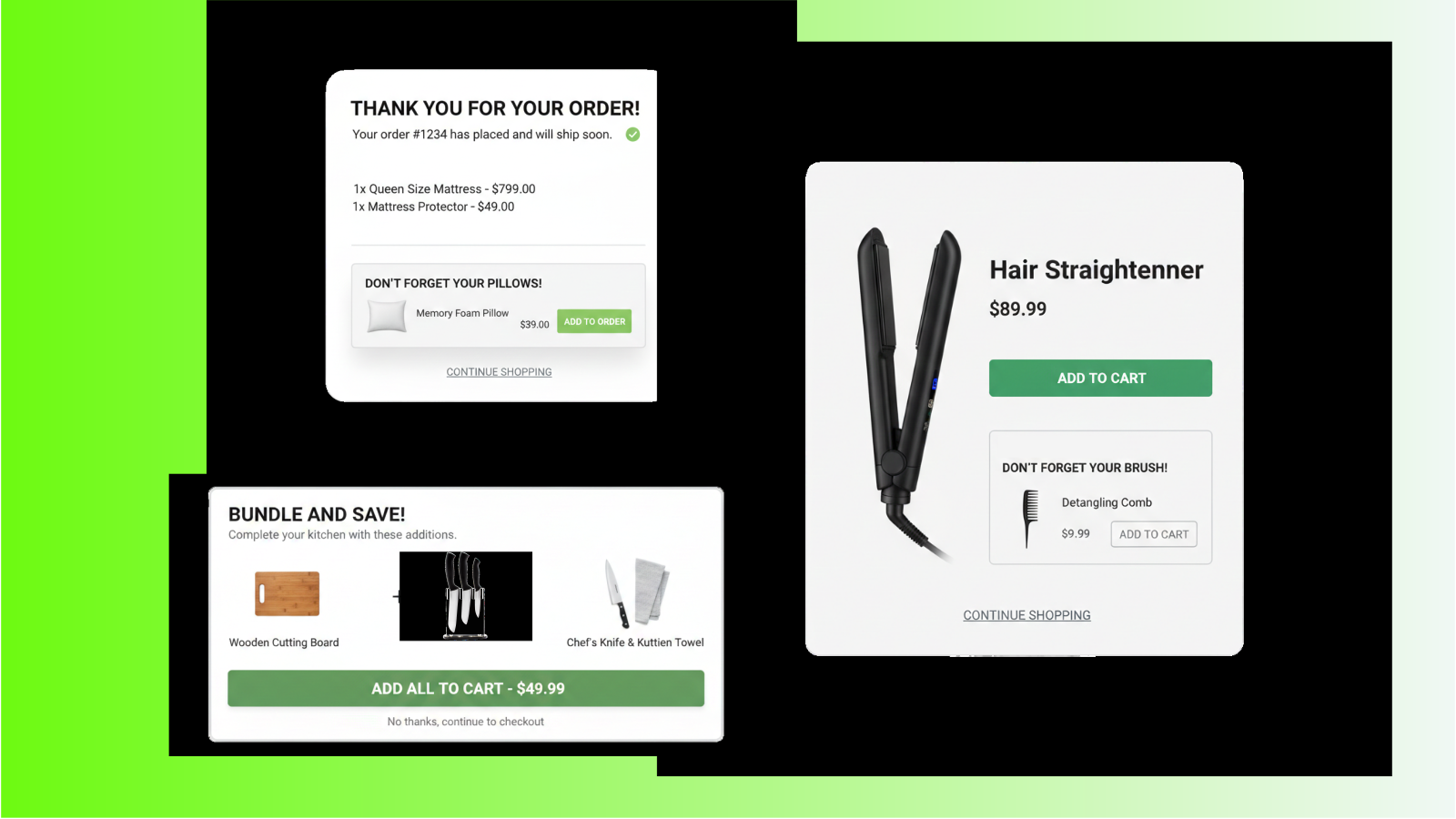
1. Guidance, Not Persuasion
Customers respond far better to contextual guidance than to aggressive persuasion. When an upsell feels like helpful assistance, it lowers psychological resistance. In our testing, subtle framing shifts significantly improved interaction rates. Messaging such as:
- “Complete your routine.”
- “Frequently paired with.”
- “Enhance your experience.”
performed better than urgency-heavy or sales-driven copy. The reason is simple: the tone feels advisory rather than transactional. Shoppers want support in making a good decision, not pressure to increase their cart value. When the upsell feels like a logical extension of what they are already buying, it becomes part of the decision-making process instead of an interruption.
2. Emotional Justification for Spending More
Every additional purchase requires internal validation. Before accepting an upsell, shoppers subconsciously justify why it makes sense. Effective upsells provide a clear, self-driven reason to upgrade. The most common emotional triggers that work well include:
- Protection (warranties, care kits, guarantees)
- Convenience (gift wrapping, bundles, faster shipping)
- Completeness (full sets, routines, matching items)
- Status or enhancement (premium upgrades, limited editions)
From our implementation experience, protection- and completeness-based framing often outperformed discount-based framing, even at similar price levels. Customers need to feel that spending more improves their original decision. When the upsell reinforces intelligence and preparedness rather than pushing urgency, acceptance increases naturally.
3. Simplicity and Clarity
Complexity increases hesitation. Simplicity increases action. Across multiple ecommerce implementations, we observed that one or two highly relevant suggestions consistently outperform pages crowded with competing offers. When bundles, upgrades, and discounts are stacked together, mental effort rises, and shoppers default to ignoring everything except the main purchase. A clear visual hierarchy, calm design, and limited choices reduce cognitive load. When evaluation feels easy, customers are more likely to engage. Decision ease is one of the most underestimated drivers of upsell performance.
4. A Sense of Control
Control is critical to emotional comfort. When shoppers feel trapped by forced pop-ups or limited navigation, resistance immediately increases. Conversely, when they see visible and respectful decline options such as “No thanks” or a clear close button, perceived autonomy increases. Interestingly, we have found that making it easier to refuse an offer often improves overall acceptance rates. When customers feel free to decline, they are more willing to consider. Comfort precedes commitment. If shoppers feel in control, they are far more open to buying more.
III. The Comfort-Based Upsell Framework
Instead of optimizing for conversion first, brands should optimize for emotional safety. In our experience, upsell performance improves significantly when the primary goal shifts from “How do we increase AOV right now?” to “How do we make this feel natural and comfortable?” Revenue becomes a byproduct of good emotional design. Below is a structured framework we use when evaluating and rebuilding underperforming upsell systems.
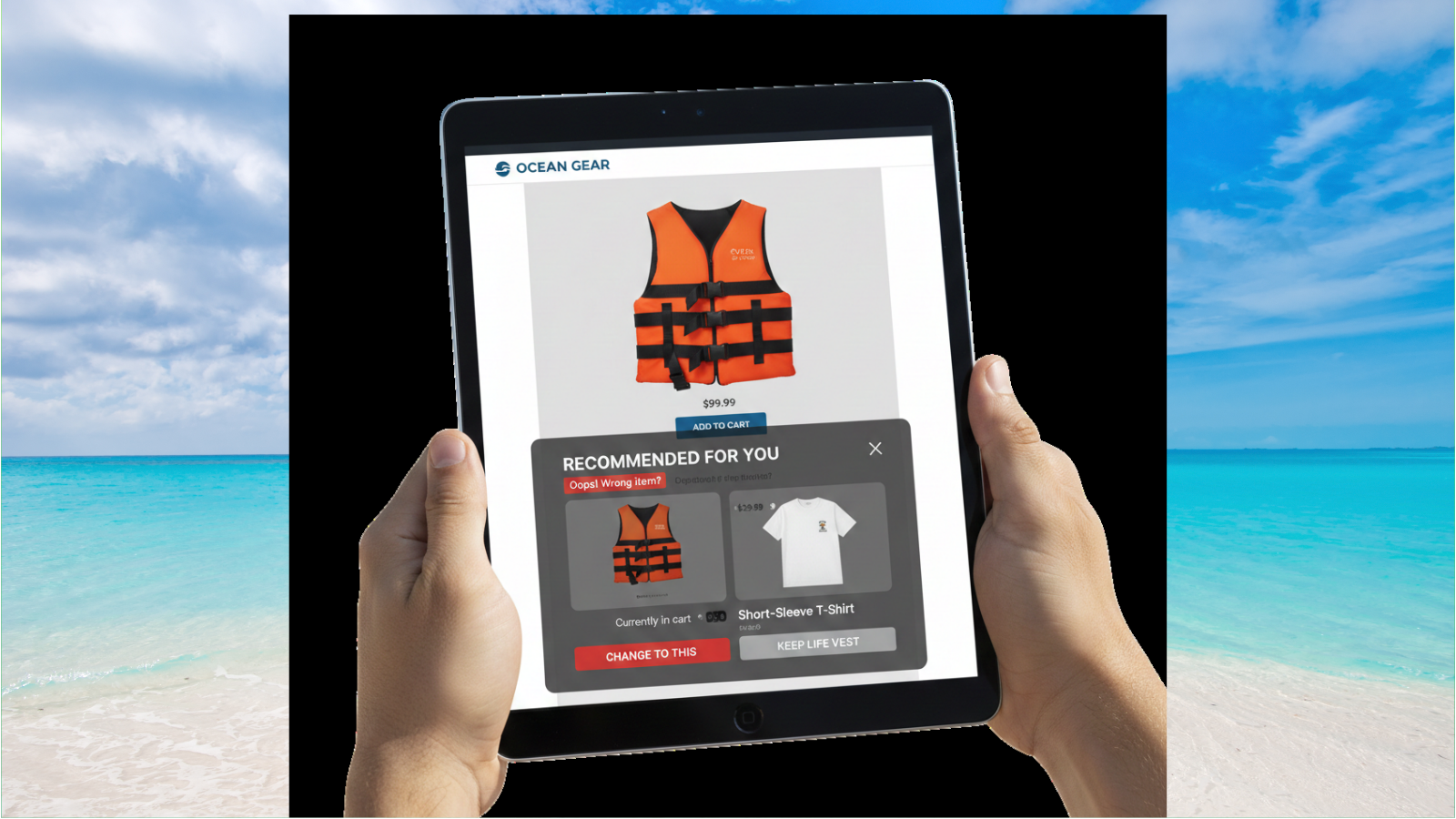
Step 1: Reduce Friction Before Increasing Value
Before presenting additional value, remove unnecessary resistance. Many brands introduce upsells too early, interrupting the browsing phase before purchase intent is fully formed. Shoppers exploring products are in a different psychological state than shoppers who have added items to their cart. Respecting that distinction is critical.
Effective friction reduction includes:
- Avoiding early full-screen interruptions during product exploration
- Allowing browsing behavior to signal intent before triggering offers
- Introducing upsells at moments of commitment, such as after add-to-cart or inside the cart drawer
When intent is already present, an upsell feels additive. When intent is still forming, it feels disruptive.
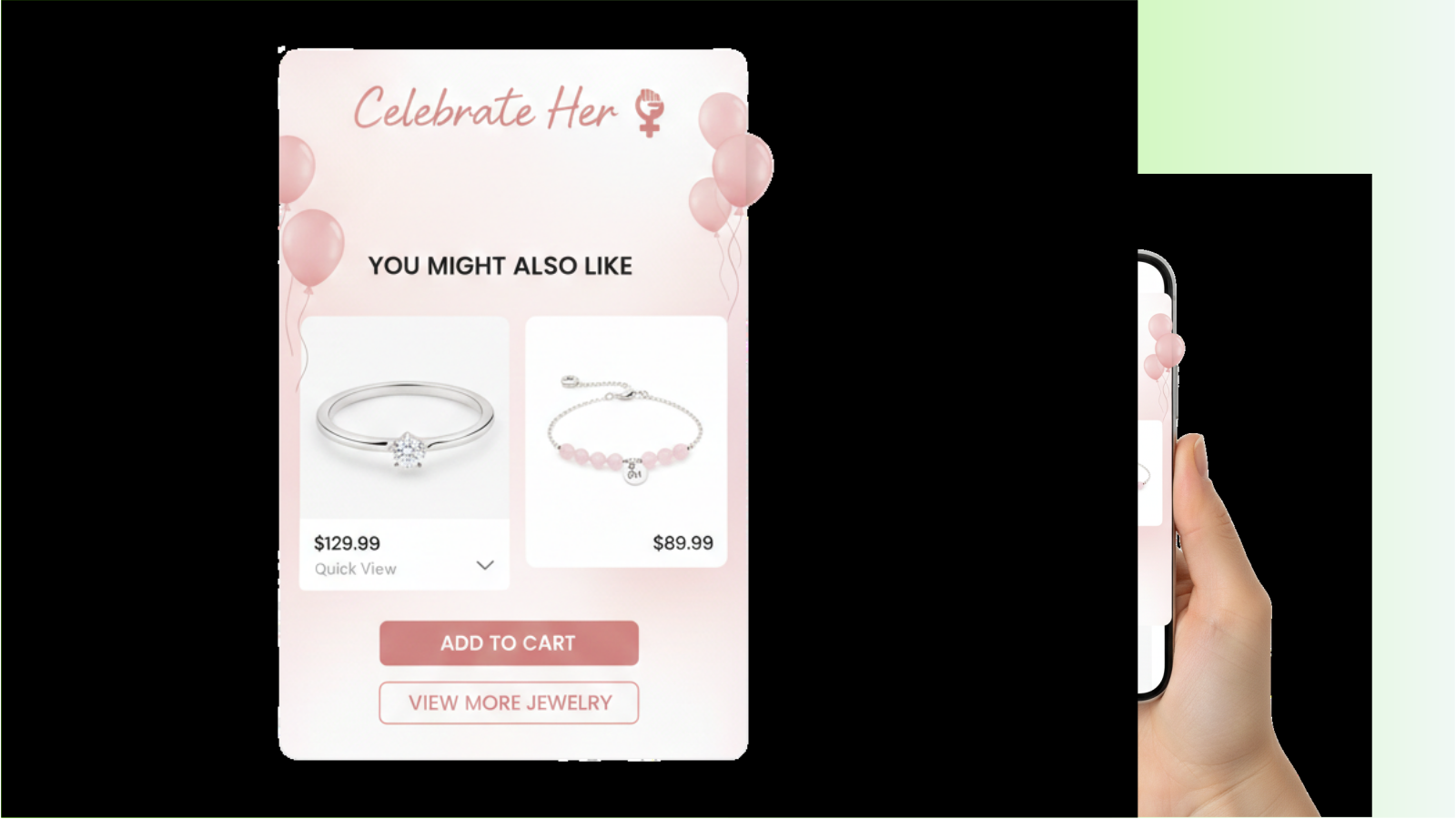
Step 2: Increase Relevance Before Increasing Price
Relevance should always precede price expansion. Many brands attempt to increase cart value by pushing larger bundles or higher-priced alternatives without confirming contextual fit. In practice, this creates resistance.
A more effective hierarchy is:
- Context over urgency
- Behavioral signals over blanket discounts
- Intent data over generic promotions
Personalization should feel intuitive, not mechanical. When recommendations align with browsing patterns, purchase history, or cart composition, shoppers perceive them as intelligent suggestions. When they feel random, trust declines. In our implementations, context-driven upsells consistently outperform urgency-driven ones, even without aggressive discounting.
Step 3: Frame Around Enhancement, Not Extraction
Language shapes emotional response. When upsells are framed as revenue extraction, customers sense it immediately. When framed as value enhancement, they feel supportive.
Instead of focusing on discount-driven pressure, effective positioning highlights experience expansion. For example, presenting an item as a way to improve durability, convenience, or completeness reinforces the original purchase decision rather than competing with it. Avoiding aggressive phrases such as “Buy more now” and replacing them with enhancement-focused framing reduces psychological resistance.
When customers perceive the upsell as strengthening their choice rather than exploiting it, acceptance rises organically.
Step 4: Maintain Visual and Cognitive Calm
The visual environment heavily influences emotional comfort. Overloaded layouts, flashing urgency elements, and dense offer stacks increase stress and decision fatigue. A calm interface lowers mental effort and encourages evaluation.
To maintain cognitive ease:
- Limit the number of simultaneous upsell offers
- Use consistent design language that aligns with the brand aesthetic
- Avoid flashing countdowns or high-intensity visual distractions
In our testing, simply reducing offer density improved engagement rates without changing the products themselves. Visual calm supports cognitive clarity, and cognitive clarity supports conversion.
Ultimately, the comfort-based framework recognizes that upselling is not about pushing harder. It is about designing experiences where buying more feels easy, rational, and emotionally safe.
IV. The Role of AI in Reducing Emotional Friction
AI in ecommerce is often positioned as a revenue acceleration tool. In practice, its deeper value lies in reducing emotional friction. From our experience implementing behavior-based upsell systems, the biggest performance improvements did not come from pushing more offers. They came from showing fewer, more intelligent ones. When AI is used responsibly, it does not amplify pressure. It removes discomfort.

Advanced AI-driven upsell systems can support emotional comfort in several ways:
- Detect real-time intent signals such as repeated product views, cart composition, and engagement depth
- Suppress irrelevant offers that do not match the behavioral context
- Adjust frequency and placement dynamically to avoid interrupting flow
- Predict complementary products based on historical and session-based patterns
- Prevent repeated exposure fatigue by limiting redundant suggestions
In traditional setups, upsells are reactive and rule-based. The same offers appear for everyone, regardless of intent or context. This is where friction begins. AI allows brands to shift from static promotion to contextual guidance. When recommendations adapt to behavior in real time, they feel less like sales tactics and more like intelligent assistance.
When implemented correctly, AI transforms upselling from a disruptive pop-up strategy into a responsive system that aligns with shopper psychology. Instead of increasing noise, it filters it. Instead of adding pressure, it improves precision. And when precision improves, comfort increases, which ultimately leads to stronger, more sustainable conversion growth.
V. Why Many Brands Optimize Revenue Too Early
In our experience working with ecommerce teams at different stages of growth, one strategic pattern appears repeatedly. Brands focus on increasing Average Order Value before strengthening the emotional foundation of the shopping experience. Revenue becomes the immediate target, while comfort and trust are treated as secondary concerns. This approach often produces short-term performance lifts, but it rarely creates sustainable growth.
When upsell strategies are built primarily around revenue extraction, they tend to rely on urgency pressure, aggressive messaging, and frequent interruptions. While these tactics may increase conversion temporarily, they also increase emotional friction. Over time, customers become less responsive, more skeptical, and quicker to ignore additional offers. What initially appears as optimization slowly turns into fatigue.

Sustainable ecommerce growth follows a different sequence. Before customers agree to spend more, they must feel psychologically safe. That progression typically unfolds in the following order:
- Comfort
- Trust
- Relevance
- Conversion
- Higher Average Order Value
Comfort reduces resistance. Trust increases openness. Relevance reinforces perceived intelligence. Only after these elements are established does conversion improve consistently. When this foundation is in place, increases in Average Order Value occur naturally because customers perceive additional purchases as logical extensions of their decisions.
Brands that invert this sequence often struggle with declining engagement. They attempt to maximize cart value before securing emotional alignment. The result is a cycle of adding more offers to compensate for falling acceptance rates, which further increases friction. In contrast, brands that prioritize emotional comfort first tend to see steadier engagement, stronger repeat purchase behavior, and healthier long-term revenue performance.
VI. Building Emotionally Intelligent Upsell Systems with Zotasell
Designing upsells around psychological comfort requires more than better copy or cleaner design. It requires a structured system that adapts to customer behavior in real time. In many ecommerce stores, upsells are still deployed as static pop-ups that appear for every visitor regardless of intent, purchase history, or context. This approach often increases noise instead of improving conversion.

Zotasell is built around a different philosophy. Instead of pushing more offers, it enables brands to deploy behavior-aware upsell logic that aligns with shopper psychology. The system focuses on precision and relevance rather than volume.
Key capabilities include:
- Real-time behavioral triggers that activate offers based on cart activity, browsing depth, and intent signals instead of blanket promotions
- Segment-based logic that differentiates between first-time buyers, returning customers, and VIP segments to avoid one-size-fits-all messaging
- Contextual placement within natural touchpoints such as the cart drawer and checkout, reducing disruption and preserving purchase momentum
- AI-driven product pairing that minimizes irrelevance and strengthens perceived personalization
- Performance tracking dashboards that help merchants identify friction points and continuously refine messaging, placement, and frequency
From our experience analyzing upsell performance across different store sizes, the most consistent improvements occur when brands reduce exposure while increasing precision. When fewer, better-aligned suggestions replace repetitive popups, customers perceive the experience as supportive rather than promotional.
The objective is not to increase the number of offers displayed. The objective is to present fewer, smarter, emotionally aligned recommendations that respect shopper intent and enhance the buying journey.
VII. Afterthought
Customers are not opposed to spending more. They are opposed to feeling pressured, overwhelmed, or misunderstood. When an upsell feels relevant to their intent, is presented in a respectful tone, and is delivered within a calm interface, resistance drops significantly. The difference between rejection and acceptance is often emotional, not financial.
Upselling is not inherently intrusive. Poorly designed upselling is. Brands that focus only on increasing cart value often overlook the psychological experience that precedes conversion. In 2026 and beyond, sustainable growth will belong to companies that design for comfort first and revenue second. When emotional safety, intelligent relevance, and thoughtful timing come together, buying more feels natural rather than forced.

Join in our newsletter
Need more detail?
Access our Help Center & Resources to learn how Zotasell works, explore use cases, and share with your team.