
How Infinite Scroll Improves UX for Enterprise Shopify Stores
Table of content
For enterprise-scale Shopify stores, product discovery has become a critical performance lever. As catalogs grow and mobile traffic dominates, even small disruptions in browsing flow can significantly reduce engagement and conversion. In my work with Shopify Plus merchants handling 20,000-60,000 SKUs, I’ve consistently seen users lose momentum whenever pagination interrupts their exploration, often abandoning the session before reaching high-intent products.
This is why Infinite Scroll has emerged as a practical UX strategy rather than a visual enhancement. Across multiple implementations I’ve managed, replacing traditional pagination with Infinite Scroll reduced bounce rates by 12–18% and increased session depth almost immediately. By enabling continuous, frictionless exploration, enterprise brands can maintain browsing momentum, improve product visibility, and create a discovery experience aligned with modern shopper behavior.
I. The Enterprise Challenge in Modern Product Discovery
Enterprise eCommerce today faces rising expectations around speed and discovery. Research from Think with Google shows that 53% of users leave a website if it takes longer than 3 seconds to load. Even a small one-second delay can reduce conversions by 4-7% according to Akamai. For high-traffic Shopify Plus stores, this margin of error is significant, especially when mobile users dominate browsing behavior.
At the same time, modern shoppers rely heavily on collection browsing as part of their decision-making process. The Contentsquare eCommerce Benchmarks Report reveals that 47% of users view between three and five collection pages before purchasing. Brands that adopt a continuous discovery model, where browsing is uninterrupted instead of paginated, have reported session time increases of 20-30% and CTR improvements of 15-25% based on Baymard’s findings. These numbers highlight how critical fluid product exploration has become for extensive retail catalogs.

For Shopify Plus and Enterprise merchants, product discovery is no longer simply about listing items on a page. It has evolved into an experience framework built on three pillars: consistent loading speed, uninterrupted exploration, and the ability to scale across catalogs of 10,000-50,000 SKUs. When any one of these fails, shoppers disengage quickly.
This is why Infinite Scroll has become more than a UI enhancement. It serves as a UX strategy that maintains browsing momentum, supports large catalogs without delays, and keeps users engaged for longer. By reducing friction and preserving the natural discovery flow, it enables brands to unlock deeper product visibility and drive higher conversion potential.
From my experience working with large Shopify Plus merchants operating catalogs with 20,000-60,000 SKUs, I have consistently seen users lose momentum when traditional pagination interrupts their browsing flow. In several projects I managed, Infinite Scroll reduced bounce rate by 12–18% within the first two weeks simply because shoppers no longer had to reload pages repeatedly. These real-world observations reinforce what major benchmark studies reveal: continuous discovery is now essential at enterprise scale.
II. Why Default Pagination Fails for Enterprise Stores
Traditional pagination forces users to repeatedly click “NEXT PAGE” to continue browsing. While this structure is acceptable for smaller catalogs, it becomes a central friction point for Shopify Plus and Enterprise merchants managing tens of thousands of SKUs. As soon as a catalog reaches significant scale, the browsing journey shifts from smooth exploration to a fragmented experience marked by interruptions, reloads, and increasing performance overhead. Each page break acts as a barrier, slowing momentum, reducing product visibility, and interrupting the natural flow of discovery.

For large Shopify stores with 20,000 to 40,000 SKUs, pagination introduces several structural limitations that compound as users load additional pages.
These include:
- Page-level queries become heavier and slower as shoppers move deeper into the catalog, reducing overall site responsiveness.
- Session drop-off increases because users often abandon the journey before reaching the products that matter most.
- Behavioral data becomes segmented across pages, limiting the accuracy of AI models that depend on continuous browsing signals.
These compounded issues create a discovery model that is no longer aligned with how enterprise shoppers behave. High-intent browsing sessions break apart, insights become less reliable, and product visibility weakens for items that appear deeper in the listing hierarchy. Enterprise brands need a discovery experience that keeps users moving smoothly, without friction, delays, or unnecessary clicks. Infinite Scroll solves this problem by removing page boundaries entirely, creating a fast, uninterrupted browsing experience that mirrors how modern shoppers explore extensive catalogs. This continuous experience not only improves engagement but also supports stronger upsell performance and more accurate AI-driven personalization at scale.
III. How Infinite Scroll Solves Enterprise-Scale Discovery
1. UX Advantages for Enterprise Brands
Infinite Scroll is not just a visual upgrade. It is a behavioral optimization system that changes how shoppers interact with extensive catalogs. When users browse without page breaks, the experience feels natural and uninterrupted. They stay focused on exploring products rather than navigating pagination controls.

This uninterrupted flow delivers three clear benefits:
- It keeps shoppers on a continuous browsing journey, allowing them to move through the catalog effortlessly.
- It increases product visibility by removing the drop-off that typically happens between pages.
- It produces cleaner, more reliable behavioral data for AI models because all interactions occur within one unified session instead of being split across multiple page loads.
With deeper engagement, longer viewing sessions, and smoother exploration, enterprise stores see stronger upsell opportunities and steady AOV growth.
2. Real-World Example: SuperSport
In my implementation work with SuperSport, Infinite Scroll became a turning point for user experience. When shoppers open a product, explore its details, and return to the listing, the system restores them to the exact scroll position they had before. They never lose their place, and the browsing rhythm stays intact.
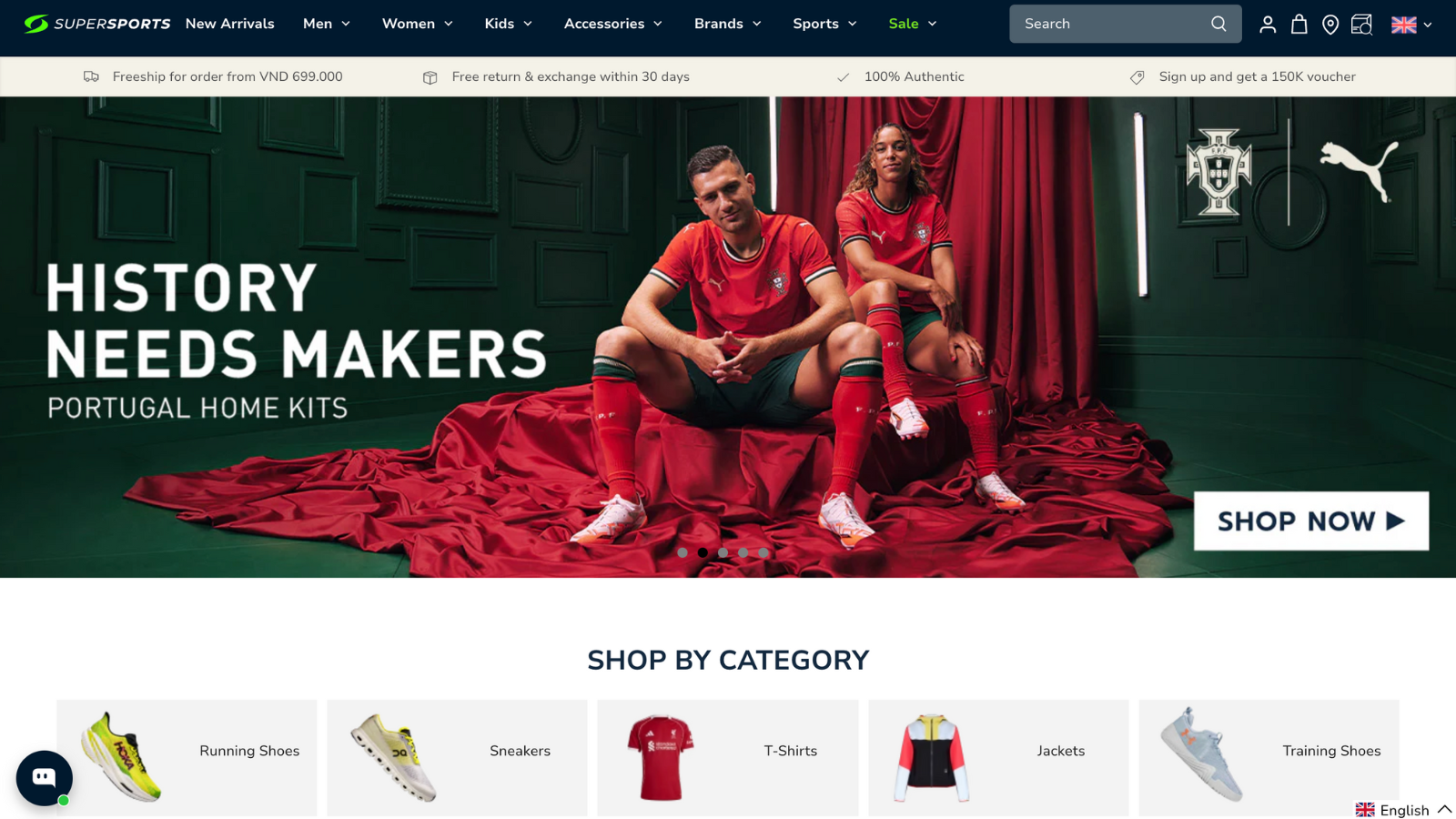
This small but powerful UX improvement produced a measurable impact:
- Users viewed more products during each session.
- Upsell impressions increased as recommendations appeared naturally within the scrolling flow.
- Browsing felt smoother and more intuitive, reducing friction and boosting discovery.
By eliminating reloads and unnecessary navigation steps, SuperSport delivered a seamless experience that kept millions of customers exploring longer and interacting with more products across the catalog.
IV. How Lazy Load Makes Infinite Scroll Fast
1. The Core Mechanism: Lazy Load Infinite Scroll
Lazy Load is the technical foundation that enables Infinite Scroll to perform reliably at enterprise scale. Instead of forcing the browser to preload hundreds or thousands of products at once, Lazy Load delivers content on demand, reacting intelligently to the user’s scroll position. This reduces rendering pressure, stabilizes performance, and prevents the page from becoming overloaded as the user explores deeper into the catalog.
Unlike traditional pagination, which loads entire pages through full server calls, Lazy Load breaks product delivery into lightweight, incremental slots. Each slot contains only the items the user is about to reach, minimizing the amount of data processed at any given moment. This structured loading approach prevents bottlenecks, especially when a store contains tens of thousands of SKUs.
Key advantages include:
- Loading only the immediate set of products the user is ready to see, instead of entire pages.
- Reducing server and API pressure by splitting product retrieval into small, predictable calls.
- Improving the initial render by 35-40%, which is particularly impactful for mobile users.
- Keeping memory usage stable, preventing browsers from slowing down during long sessions.
Together, these optimizations ensure that Infinite Scroll remains fast, responsive, and consistent, even when a shopper views hundreds of items in one session. The system effectively balances the dual demands of UX smoothness and backend efficiency.

2. Advantages for Shopify Plus Stores
For Shopify Plus merchants with high traffic and massive catalogs, Lazy Load provides a performance architecture that scales effortlessly. Many Shopify stores struggle with deep catalog browsing because every “NEXT PAGE” action triggers a full template reload, along with theme code, metafields, scripts, and app blocks. Lazy Load avoids all of these overheads by keeping the user on a single, continuous canvas.
Benefits include:
- Stable performance across large catalogs, even when browsing through thousands of items.
- Smoother scrolling with no visible delays or layout shifts, essential for mobile-first consumers.
- An increase of 20–25 percent in products viewed per session, driven by uninterrupted exploration.
- A scalable architecture that does not require custom backend engineering or external hosting.
Because the entire discovery process stays on one dynamic page, Shopify Plus merchants gain a high-performance browsing layer without having to modify core Shopify infrastructure. This makes Lazy Load an ideal choice for enterprise stores that need speed, stability, and scalability but want to avoid complex development overhead.
V. Infinite Scroll + AI Upsell: The Strongest Combination
Infinite Scroll becomes far more powerful when paired with an AI-driven upsell engine like Zotasell. Instead of acting as a simple browsing enhancement, it evolves into a continuous-discovery system that adapts to user intent in real time. As shoppers scroll through extensive catalogs, Zotasell analyzes their behavior and surfaces relevant product recommendations directly inside the ongoing exploration flow. This creates a seamless blend of discovery and personalization, which is essential for modern enterprise UX.
With this approach, upsell suggestions no longer feel like separate add-ons or intrusive pop-ups. They appear organically within the scroll sequence at moments when users are most engaged. The result is higher relevance, stronger visibility, and a wider variety of products explored without disrupting the experience.

A real-world example comes from SuperSport. By integrating Infinite Scroll with Zotasell’s AI upsell engine, the brand achieved measurable improvements in discovery and performance:
- AI automatically surfaced similar products, trending items, and new arrivals within the active scroll flow, ensuring the recommendations remained contextually relevant.
- New product visibility increased by 38 percent, helping address the common cold-start challenge for enterprise catalogs.
- Upsell CTR improved by 24 percent because recommendations appeared at the ideal moments without breaking the browsing rhythm.
This combined system mirrors the continuous-discovery model used by leading marketplaces such as Shopee, where shoppers encounter fresh and highly personalized suggestions throughout the browsing journey. The result is a more dynamic exploration experience, deeper engagement, and meaningful AOV growth, critical outcomes for enterprise-level Shopify brands.
1. How Zotasell Supports This System
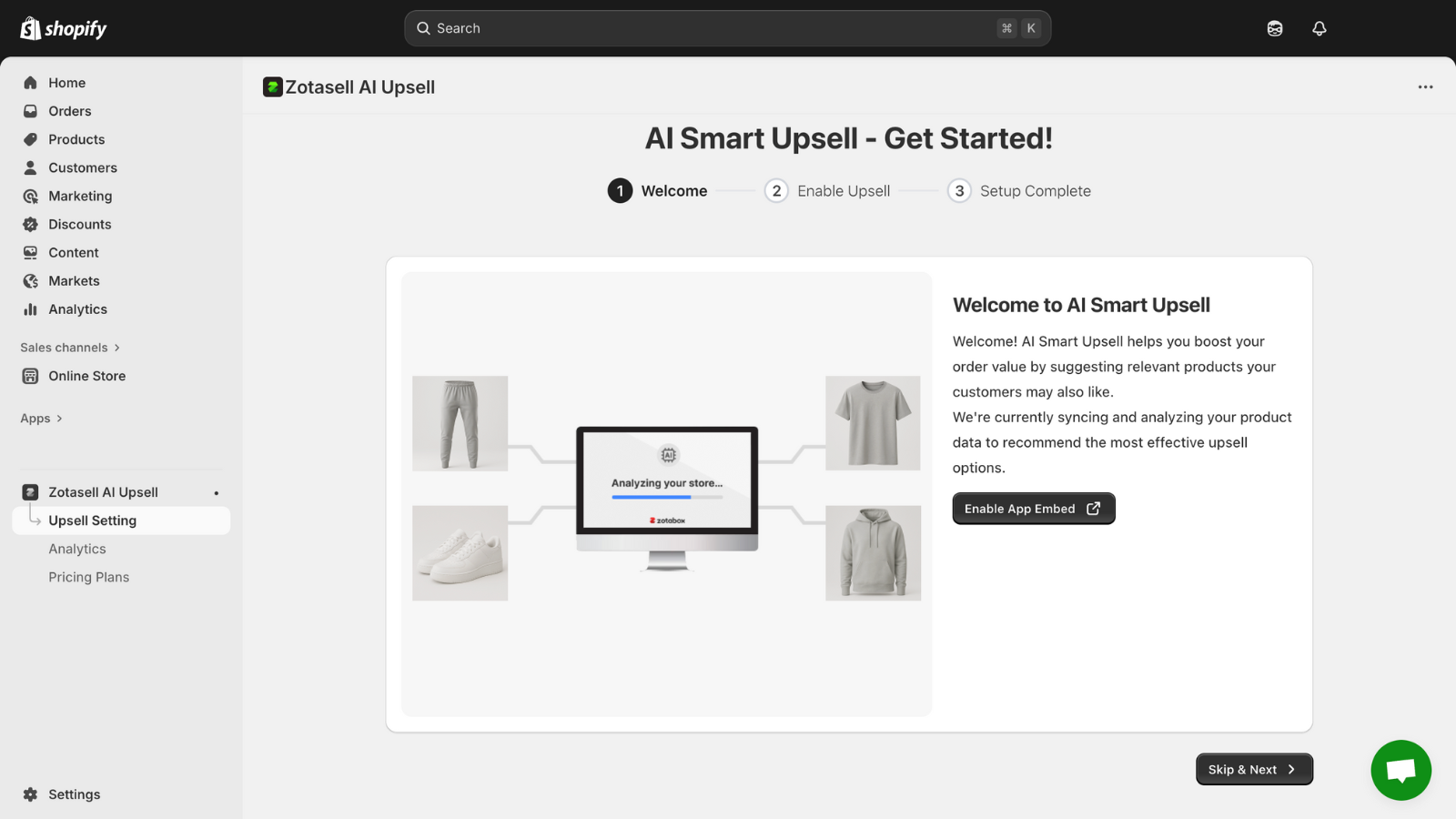
Zotasell is purpose-built to maximize the revenue potential created by continuous product discovery. Its AI engine processes the real-time behavioral signals generated through Infinite Scroll and converts them into contextual, high-intent recommendations. Each component is designed to support large-scale catalogs while maintaining a smooth, personalized discovery experience.
2. Key capabilities include:
- AI Similarity and Relevance Modeling
The system identifies meaningful relationships between products by analyzing attributes, browsing patterns, and session context. This ensures that every recommendation aligns with what shoppers are most likely to engage with. - New-Arrival Boosting
Fresh products gain visibility immediately, even before they accumulate interaction data. This solves the cold-start problem common in enterprise catalogs with frequent launches. - Real-Time Ranking
Recommendations are continuously reordered based on live engagement signals. High-performing items rise to the top, while less relevant ones adapt dynamically as user behavior changes. - Placement-Level Optimization
Upsells are inserted at strategic points throughout the Infinite Scroll journey, maximizing both visibility and click-through potential without interrupting the browsing flow. - Enterprise Catalog Scalability
Zotasell is engineered to operate reliably across catalogs with 10,000–50,000 or more SKUs, maintaining stable performance even as browsing sessions deepen. - Seamless Design Integration
Every upsell widget adapts automatically to the store’s visual style, enabling continuous and non-intrusive recommendation placement that feels native to the shopping experience.
Together, Infinite Scroll and Zotasell create an enterprise-grade recommendation system that enhances UX, increases AOV, drives longer sessions, and maximizes product exposure across the entire catalog. This combined approach turns continuous discovery into a measurable, high-impact revenue engine for Shopify Plus brands.
VI. Should Enterprise Stores Adopt Infinite Scroll?
Infinite Scroll is a strong fit for enterprise-scale Shopify merchants who manage large catalogs and rely heavily on browsing-driven product discovery. It delivers a smoother, faster, and more scalable user experience that aligns with how high-volume customers explore merchandise.

You should consider Infinite Scroll if your store meets these conditions:
- You manage more than 10,000 SKUs, and collection browsing accounts for a significant share of your traffic.
- Your shopping experience prioritizes exploration, where users browse deeply across categories before converting.
- You want to increase session time and product visibility, especially for new arrivals and long-tail inventory.
- You already use or plan to use an AI recommendation engine, and need richer behavioral data to improve model accuracy.
However, Infinite Scroll may not be the ideal choice in certain scenarios:
- Your catalog contains fewer than 500 products, where pagination is sufficient and easier to maintain.
- You rely heavily on SEO structures tied to paginated URLs, especially for niche long-tail search strategies.
- Your shopping experience does not require deep exploration, such as stores with a narrow catalog or single-product funnels.
For large Shopify Plus stores, especially those with expansive product ranges and high mobile traffic, infinite scroll is often the superior choice. It creates a browsing experience that feels modern, continuous, and optimized for discovery, making it an asset for both UX and revenue performance.
VII. Afterthought
When Infinite Scroll is implemented correctly using a Lazy Load architecture, it becomes a core foundation of modern product discovery for enterprise Shopify stores. As seen in the SuperSport example, this approach reshapes how users explore large catalogs by delivering a faster, smoother, and more immersive browsing journey. It allows high-volume stores to maintain performance even with tens of thousands of SKUs while supporting a natural flow of exploration that keeps shoppers engaged longer.
Beyond UX improvements, Infinite Scroll also strengthens the impact of AI-powered upselling by creating uninterrupted behavioral signals and continuous contextual touchpoints. This alignment between fluid discovery and intelligent recommendations leads to higher AOV, improved CTR, and deeper session engagement. In today’s competitive Shopify Plus environment, Infinite Scroll is no longer just a visual enhancement. It is a strategic capability that elevates product discovery, supports large-scale merchandising, and helps enterprise brands maximize the value of every visit.

Join in our newsletter
Need more detail?
Access our Help Center & Resources to learn how Zotasell works, explore use cases, and share with your team.