
Why Frequently Bought Together Often Recommends the Wrong Products

Table of content
In eCommerce, the ability to recommend the right products can make the difference between a completed purchase and a missed opportunity. One of the most widely used tools for this purpose is the “Frequently Bought Together” (FBT) feature, a system that automatically suggests items commonly purchased alongside the product a shopper is viewing or has added to their cart.
Once celebrated for its ability to increase average order value and enhance the shopping experience, FBT earned its place as a go-to upsell tactic. However, as consumer behavior evolves rapidly, this traditional model is starting to show its limitations. To understand why a once-reliable tool may now be hindering conversions instead of helping them, let’s first explore how FBT works and why it was considered a breakthrough in its time.
I. How Does “Frequently Bought Together” Work?

“Frequently Bought Together” (FBT) is a widely used recommendation format in eCommerce, often appearing as “Customers Who Bought This Also Bought” or “You Might Also Like.” Its main goal is to use past purchase data to suggest products commonly bought together, helping merchants raise Average Order Value (AOV) and improve cross-sell performance.
FBT works by analyzing large volumes of historical transaction data to identify products that are often purchased in the same order. These patterns are detected using collaborative filtering, a recommendation algorithm that compares the behavior of users with similar purchasing habits. Rather than relying solely on product attributes, it looks at what real customers buy together. For instance, if many people buy Product A and Product B in the same cart, the system will suggest B to future users viewing A.
This technique is a cornerstone of recommendation engines used by major platforms. According to industry reports, about 35% of Amazon’s revenue is driven by recommendation systems, including FBT. Other studies show that personalized product suggestions account for 24-31% of total online sales, while also improving conversion rates and customer engagement.
Thanks to its effectiveness, FBT was once considered one of the best ways to increase order size and customer satisfaction. When supported by a large dataset, the suggestions it provides often feel seamless and “natural,” encouraging shoppers to add relevant extras they might have otherwise missed.
II. Why “Frequently Bought Together” Often Recommends the Wrong Products
While “Frequently Bought Together” recommendations can be powerful, they aren’t always accurate. In reality, these suggestions often miss the mark, either by showing irrelevant products or failing to reflect the customer’s current intent. To understand why this happens, let’s explore the key reasons behind FBT’s frequent inaccuracies.
1. Noisy Data
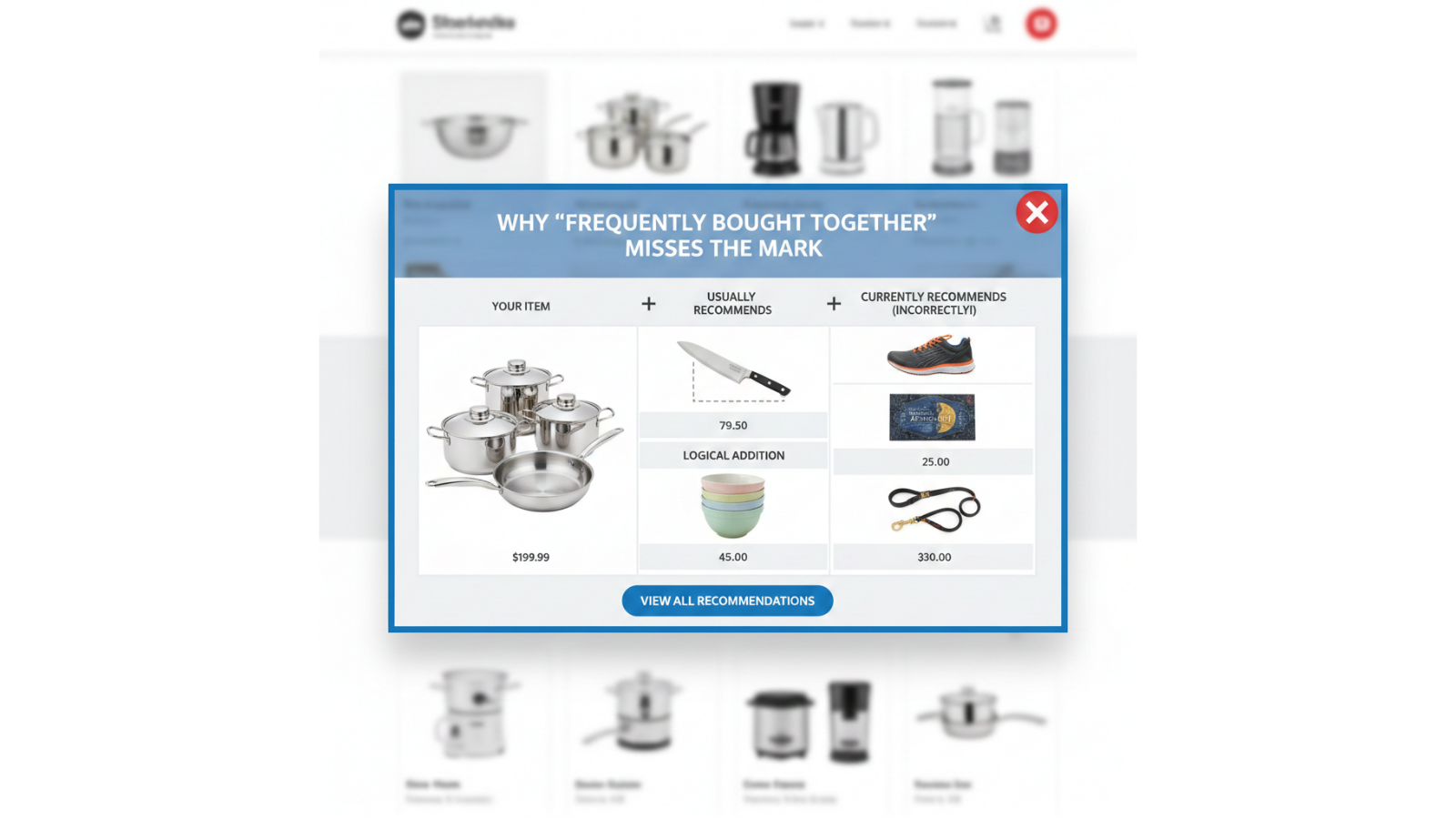
FBT relies heavily on historical purchasing behavior, particularly on products that are frequently added to the cart together. However, customers don’t always end up buying everything they add to their carts. They might add items to compare, save for later, or abandon during checkout. When these incomplete behaviors are treated as valid training data, the system ends up learning relationships that don’t truly reflect real purchasing intent. As a result, it generates inaccurate suggestions that can lower conversion rates.
2. Products Aren’t Functionally Related
Just because two products are purchased together doesn’t necessarily mean they are functionally or contextually related. For example, a customer might buy a keyboard and a self-help book in the same transaction, but that doesn’t mean these products serve the same purpose. If the algorithm continues to recommend self-help books to users shopping for keyboards, those suggestions can feel irrelevant and out of place. This disrupts the shopping experience and may frustrate potential buyers.
3. Insufficient Data for New or Low-Traffic Products
Newly launched or less popular products often lack enough historical data for FBT to generate accurate recommendations. The system tends to either exclude these products altogether or offer generic, non-contextual suggestions. As a result, high-potential items remain hidden during upsell or cross-sell campaigns, reducing visibility and weakening the impact of new product launches.
4. Incorrect Product Categorization or Metadata
FBT algorithms rely heavily on accurate product categorization and metadata to identify relevant relationships. If the product catalog isn’t regularly updated or metadata is inconsistent, products may end up in the wrong category. For instance, a phone charger mislabeled as a “home appliance accessory” rather than a “mobile accessory” could lead to mismatched suggestions. This disrupts the recommendation chain and decreases overall system accuracy.
5. Rigid Algorithms That Fail to Adapt
Traditional FBT systems typically do not adapt in real time. They rely on static relationships based on outdated data and continue to apply them over time. Yet, shopping behavior can shift rapidly due to seasonal changes, promotional events, or emerging trends. If the recommendation engine lacks the flexibility to incorporate fresh data, it will keep serving suggestions that were once relevant but are no longer appropriate, resulting in a stale and less engaging experience.
III. The Consequences of Inaccurate FBT Recommendations

1. Poor User Experience
When customers are presented with odd or unrelated product suggestions, their shopping journey becomes disrupted and feels unprofessional. This damages their perception of the store and reduces trust in the recommendation system. Studies have consistently shown that personalized product recommendations significantly increase engagement, including higher open and click-through rates. In contrast, irrelevant suggestions lead to lower interaction and a higher bounce rate.
2. Lower Conversion Rates
One of the most critical KPIs in eCommerce is the conversion rate, the percentage of visitors who complete a purchase. Globally, the average eCommerce conversion rate hovers around 2.5% to 3% in 2025, although many stores aim higher. When customers receive inaccurate product suggestions, they are less likely to complete their purchase or add additional items to their cart, dragging overall conversion rates below industry benchmarks.
3. Decreased Average Order Value (AOV)
Average Order Value is a key metric for measuring upsell and cross-sell performance. Inaccurate recommendations significantly reduce the likelihood of customers adding more items to their cart, which in turn lowers AOV and impacts revenue per session. Research shows that personalized recommendation engines can increase AOV by 26% to over 30% compared to non-personalized experiences. However, when suggestions are generic or irrelevant, this impact disappears.
4. Damaged Brand Perception
Inaccurate or unrelated recommendations may give the impression that the store is “spamming” customers with irrelevant content. According to personalization statistics, 76% of consumers prefer personalized experiences, and nearly 60% say it’s a key factor in their decision to return to a brand. Poor recommendations can diminish this trust, making shoppers less inclined to come back.
5. Negative Impact on Ads and Remarketing Campaigns
Product recommendation engines are often tied into advertising data, email remarketing flows, and dynamic targeting strategies. When FBT delivers inaccurate suggestions, it can contaminate the targeting data used for ads. This leads to irrelevant ad placements, wasted budget, and underperforming campaigns. On the flip side, well-personalized recommendation strategies have been shown to reduce cart abandonment rates by up to 4.35% and improve re-engagement performance across channels.
IV. Smarter Ways to Optimize Product Recommendations
1. Combine Multiple Recommendation Models Instead of Relying on Just One
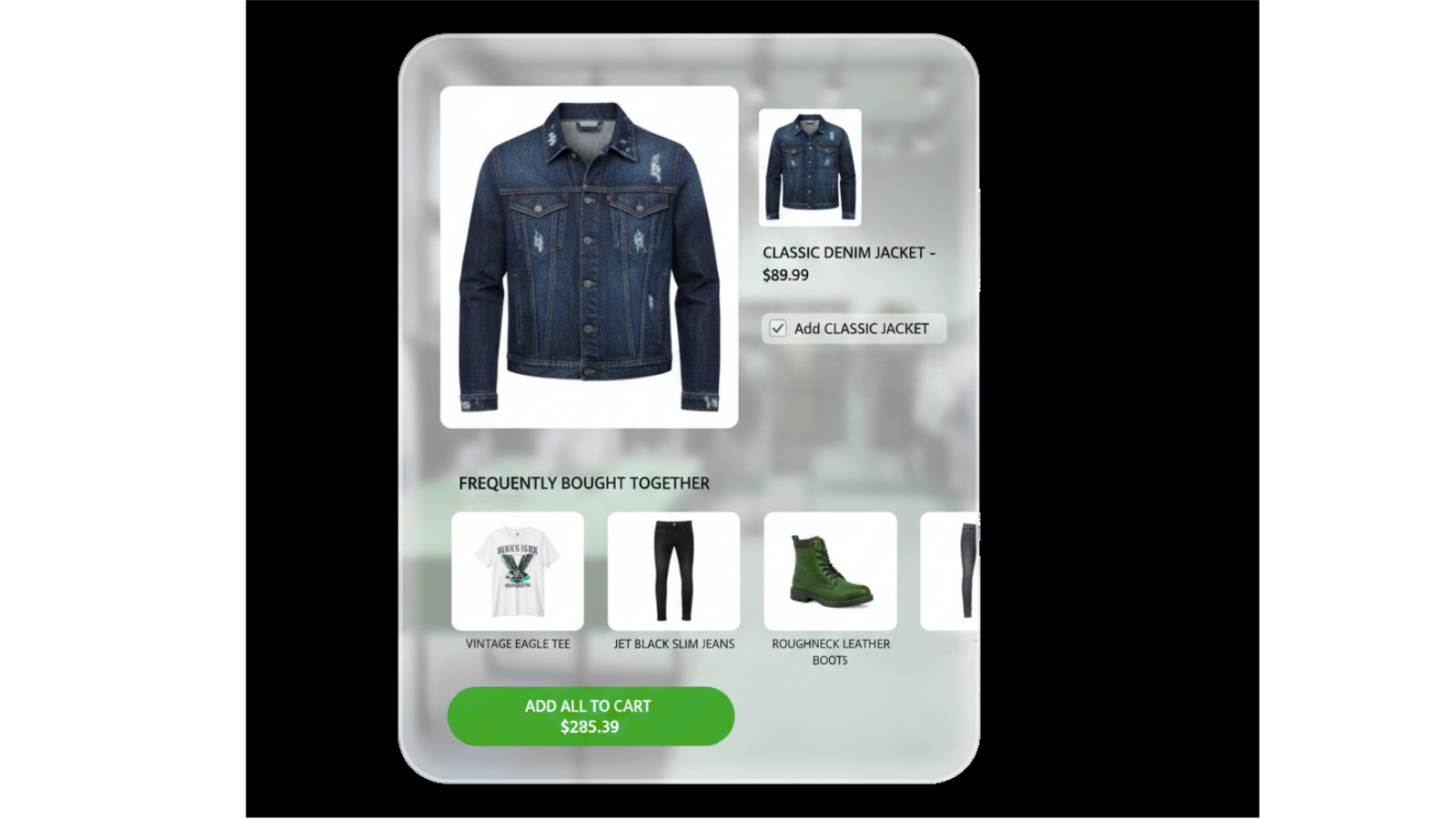
Most recommendation systems today still rely on a single model, typically Collaborative Filtering, which suggests products based on past purchase behavior. While this works well for popular items with lots of data, it struggles with new customers or new products where historical data is limited or nonexistent. As a result, recommendations can feel generic or irrelevant, especially in fast-changing catalogs.
A more effective approach is to combine Collaborative Filtering with Content-Based Filtering. This hybrid model analyzes both user behavior and product attributes, such as brand, color, category, or description, to suggest items that are relevant even when past interactions are sparse. By layering these models, merchants can deliver recommendations that are both smarter and more resilient, ensuring better performance across different customer segments and product types.
2. Segment Customers for More Relevant Suggestions
Not all shoppers have the same intent or preferences. Someone buying office supplies behaves differently from a customer browsing baby products. By segmenting users based on factors like demographics, behavior, or device type, your recommendation system can tailor suggestions that feel more personalized and relevant, ultimately leading to higher conversion rates.
- Tech buyers → suggest accessories or extended warranties
- Beauty shoppers → recommend complete skincare sets or routines
Segmentation allows your upsell engine to speak directly to different customer needs, increasing the likelihood that they’ll engage with the suggestions you present.
3. Regularly Update Product Catalogs and Metadata
Inaccurate or outdated product data is one of the biggest obstacles to effective product recommendations. When items are mislabeled, missing attributes, or placed in the wrong category, recommendation engines can’t make reliable connections. For example, if a wool sweater is incorrectly tagged as a T-shirt, the system may suggest irrelevant items like summer shorts or cotton basics, leading to a poor customer experience and missed upsell opportunities.
To avoid this, businesses should regularly review and clean their product catalogs. This includes standardizing attributes like size, material, color, and usage, as well as confirming product titles and category placements are correct. A well-maintained metadata structure gives AI models better context to work with, helping them identify meaningful relationships between products and serve recommendations that align more closely with what customers are actually looking for.
4. Recommend Based on Use Case, Not Just Category
Effective recommendations should solve a problem or meet a need, not just suggest items from the same product category. Instead of assuming that shoppers always want more of the same type, consider what they might actually need next based on how they intend to use the item. For example:
- Buying a camera → recommend memory cards, tripods, or protective camera bags
- Buying a night lamp → suggest spare bulbs, smart light timers, or calming essential oils
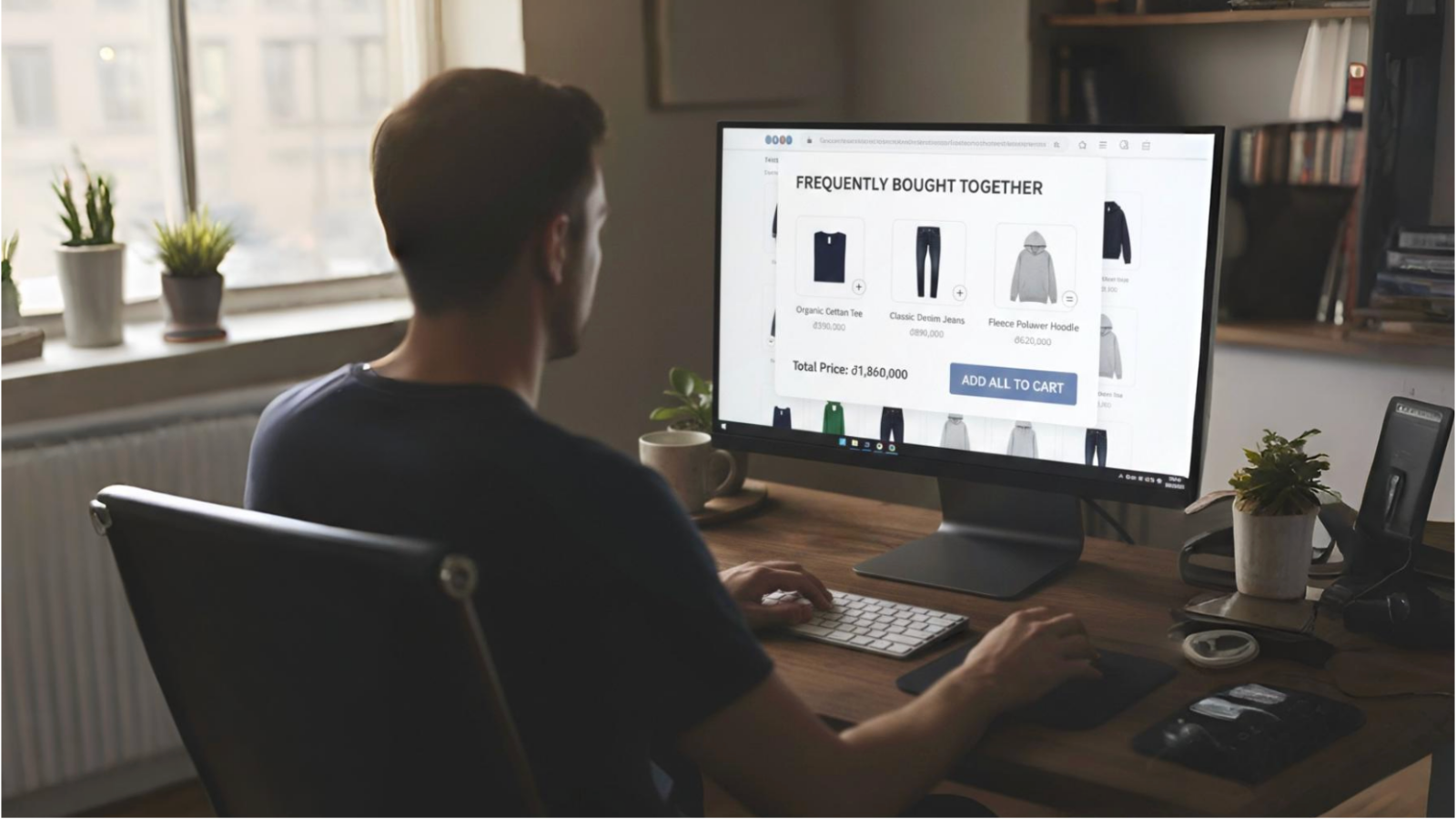
This type of contextual suggestion, often called use-case-based recommendation, is especially valuable because it mirrors how people naturally shop. It anticipates their next step, rather than simply offering variations of what they’re already buying. This makes your upsells feel helpful, personalized, and more likely to convert.
5. Blend Automated Recommendations with Manual Curation
While AI-powered recommendations are efficient, they don’t always align with your strategic business goals. For example, you might want to promote a newly launched product, highlight a seasonal collection, or support a campaign with time-sensitive offers. Relying solely on automation in these scenarios could result in missed opportunities, especially when the AI hasn’t yet gathered enough data on newer items or shifting customer interests.
To stay agile, it’s important to combine AI automation with manual curation. Merchants can “pin” specific products to appear in recommendation slots or create custom bundles that reflect brand priorities. This hybrid approach gives you the best of both worlds: data-driven personalization that scales automatically, and hands-on control to guide customer discovery toward the products that matter most to your business.
6. Use a Self-Learning Recommendation System
Modern customer behavior changes quickly—shaped by seasons, trends, and even viral moments. A recommendation engine that only relies on past data will eventually fall behind. Instead, your system needs to adapt in real time. For example, if shoppers suddenly shift their interest toward summer products like sunscreen or travel gear, your recommendations should reflect that change without delay.
A self-learning solution like Zotasell Vega Plus addresses this challenge by tracking live user behavior within each session. It continuously updates what it shows based on the most relevant signals, without needing manual rule changes. This kind of responsiveness ensures your product suggestions stay fresh, timely, and aligned with actual customer intent, which helps boost conversions and deliver a more intuitive shopping experience.
Afterthought
The “Frequently Bought Together” model was once a valuable tool for increasing average order value (AOV) and improving the overall shopping experience. However, as consumer behavior becomes more diverse and dynamic, traditional FBT logic often falls short, delivering irrelevant suggestions, missing context, or failing to meet real-time needs. These issues don’t just lower conversion rates; they can also erode brand trust and reduce the overall effectiveness of your sales campaigns.
If you want to maximize the value of every session and deliver truly personalized shopping experiences, it’s time to evolve. A smarter recommendation engine like Zotasell, one that understands context, learns from real user behavior, and aligns with your specific business strategy, can help you move beyond the limits of FBT. Effective upselling isn’t just about showing more products; it’s about showing the right products at the right moment.

Join in our newsletter
Need more detail?
Access our Help Center & Resources to learn how Zotasell works, explore use cases, and share with your team.